

ATP- Definition, Structure, Production, Synthesis, Functions
May 17, 2024 | by Bloom Code Studio

ATP (Adenosine Triphosphate) is a pyrophosphate molecule that provides energy for conducting metabolic processes, i.e., sustaining the life of a cell.
It is a complex organic high-energy compound that provides energy for conducting metabolic processes. It is referred to as “the molecular unit of currency” of the intracellular energy transfer or “Energy Currency of the Cell” or “energy unit of the cell”. It is the primary energy source for use and storage inside every cell.
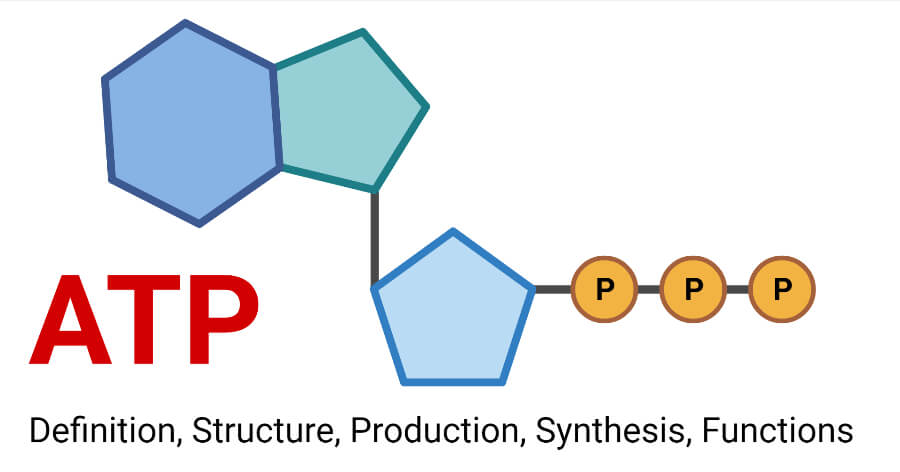
It is a complex organic molecule consisting of adenine, ribose, and a triphosphate moiety. The energy released during cellular respiration is trapped in the form of two phosphodiester bonds in the ATP molecule. During the hydrolysis of these high-energy phosphodiester bonds in ATP molecules, energy is released, then used for cellular activities.
IUPAC Name: Adenosine 5′-(tetrahydrogen triphosphate)
Molecular Formula: C10H16N5O13P3
Molecular Weight: 507.18 g/mol
Density: 1.04 g/cm3
Solubility: Water soluble
RELATED POSTS
View all


ATP Synthesis Mechanisms
May 17, 2024 | by Bloom Code Studio
Structure of ATP
May 17, 2024 | by Bloom Code Studio
Hydrolysis of ATP
May 17, 2024 | by Bloom Code Studio