

Variation/ Types of osmosis
May 13, 2024 | by Bloom Code Studio

There are some variations or types of osmosis on the basis of the direction of the movement of solvent molecules.
Reverse osmosis and Forward osmosis
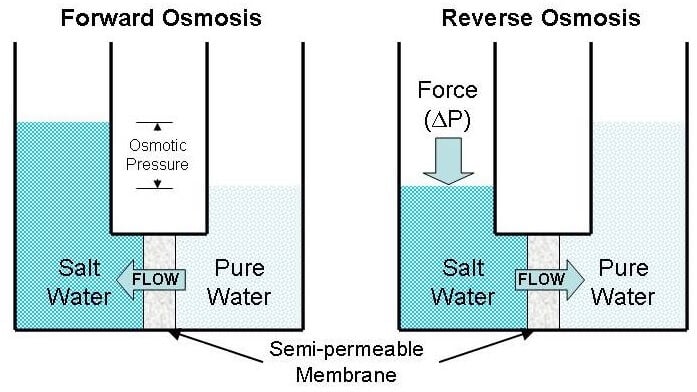
- Reverse osmosis is a method of separation that is used to force a solvent through a semi-permeable membrane resulting in solute molecules on one side and solvent molecules on the other side.
- Reverse osmosis is different than the forward osmosis in that reverse osmosis utilized hydraulic pressure to force the solvent against the osmotic pressure.
- Forward osmosis is another variation of osmosis where the osmotic pressure gradient is used to induce the flow of water from the sample solution to separate the solutes.
- Forward osmosis uses a draw solution with a higher concentration of solute, which extracts the solvent molecules from the sample solution; thus, resulting in the separation of solute and solvent in the sample solution.
Endosmosis and exosmosis
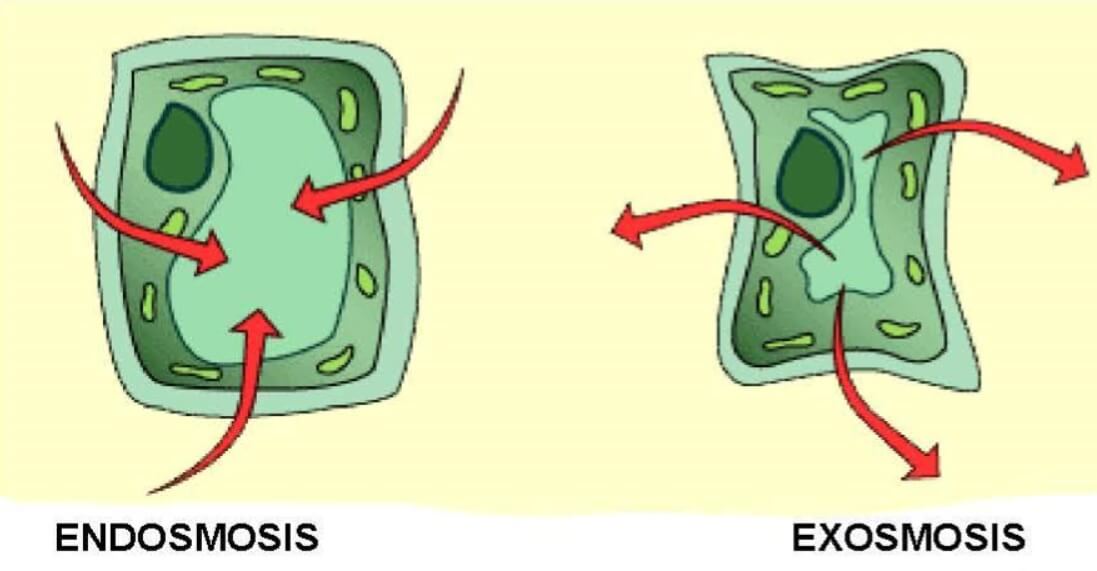
- Endosmosis is the movement of water into the cell which occurs when a cell is placed in a solution having a higher concentration of water than the cell.
- Exosmosis is the movement of water out of the cell which occurs when a cell is placed in a solution having a higher concentration of solute than the cell.
- Cells swell up in size after endosmosis while the cells shrink after exosmosis.
RELATED POSTS
View all


Factors affecting osmosis
May 13, 2024 | by Bloom Code Studio
Mechanisms of osmosis (How does osmosis work?)
May 13, 2024 | by Bloom Code Studio
Osmosis: Definition, Types, Examples (Osmosis vs Diffusion)
May 13, 2024 | by Bloom Code Studio