

Life cycle and reproduction of Angiosperms
May 13, 2024 | by Bloom Code Studio

- Flowers are the reproductive organ in angiosperms.
- The sexual reproduction process depends upon pollination to bring these gametophytes into a close association so that fertilization can take place.
- All plants undergo alternation of generation and alternation between haploid gametophyte and diploid sporophyte’s life stages.
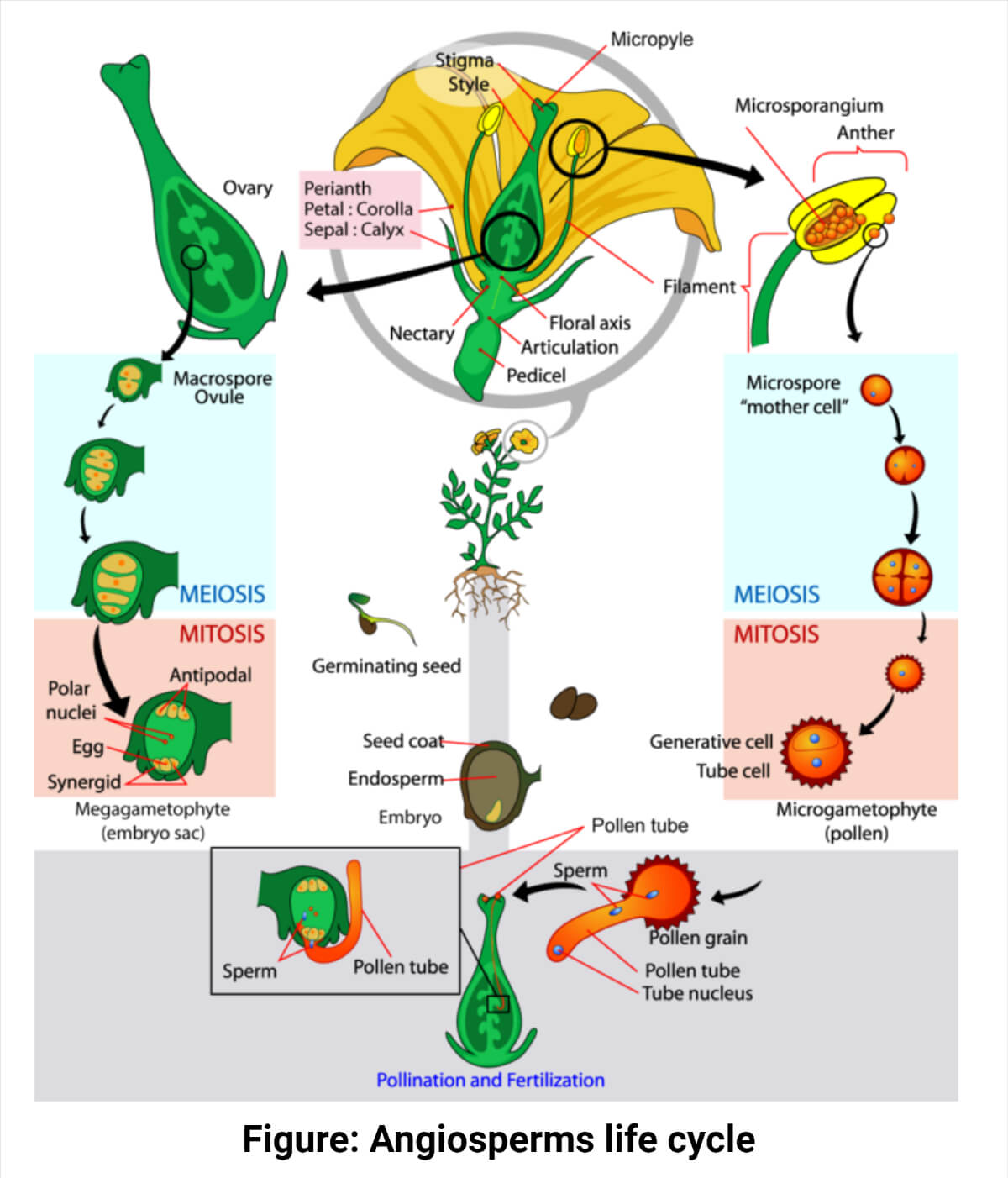
- Sporophytes are the main phase of the life cycle of angiosperms.
- Angiosperms are heterosporous and produce microspores that will form pollen grain (male gamete) and megaspores that will produce female gametophyte ovule.
- Inside the anther, microsporangium is present. These microsporangia undergo meiosis division and generate haploid microspores, and again microspores undergo mitosis division and produce pollen grains. Each pollen grains have two cells: one generative cell, which is divided into two sperm cell, and a second cell which is developed into the pollen tube cells.
- Inside the ovule, megasporangia are presently surrounded by integument and the ovary wall, Megasporocytes produce four megaspores through meiosis (three small and one large), and only large megaspores are retained and produce embryo sac.
- One egg cell, three antipodal cells, two synergids, and two polar nuclei are present in the mature embryo sac.
- When the pollen grain migrates and reaches the stigma, it enters the stigma, and the pollen cell extends from the pollen grain down the style to form the pollen tube. The generating cells divide mitotically to form two sperm nuclei. These are deposited into the embryo sac.
- A double fertilization process then occurs. Once the sperm nucleus fertilizes the haploid egg creating the diploid zygote, the future embryo and the other sperm fertilize with the polar nuclei (2n), forming a triploid (endosperms).
- The diploid seed coat hardens, and the endosperms tissue serves as a food source for the embryo while the seed is dormant.
- After germination, when the seed coat breaks to expose the sporophyte, the sporophyte grows and matures into the flowering plant, and the cycle repeats.
RELATED POSTS
View all


Uses and Applications of Angiosperms
May 13, 2024 | by Bloom Code Studio
Morphology/ Anatomy of Angiosperms
May 13, 2024 | by Bloom Code Studio
Angiosperms Examples
May 13, 2024 | by Bloom Code Studio