

Alternation of Generations- Life Cycle in Plants
May 13, 2024 | by Bloom Code Studio

Alternation of generations can be defined as a reproductive cycle of certain vascular plants, fungi, and protists in which each phase is made up of one of two distinct, free-living organisms: a gametophyte, which is frequently but not always genetically haploid, and a sporophyte, which is frequently but not always genetically diploid.
All plants alternate between sexual and asexual reproduction and between the diploid sporophyte and the haploid gametophyte. Hence, the life cycle of plants is known as the alternation of generations. The capacity of plants for both sexual and asexual reproduction helps in their capacity for environmental adaptation.
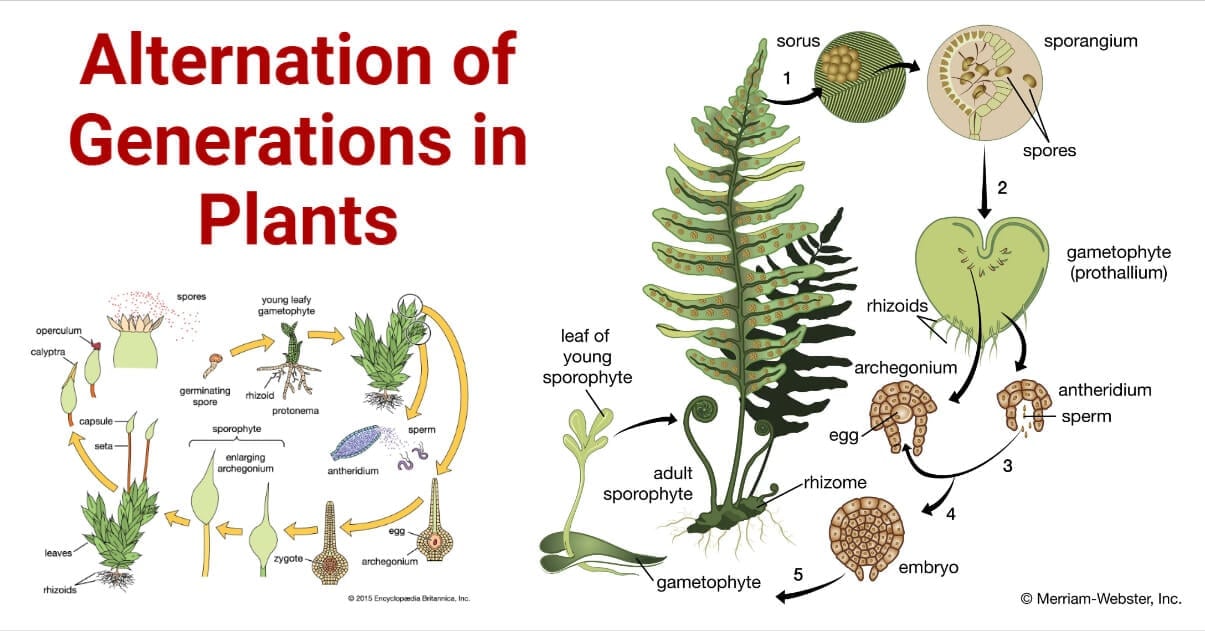
Embryonic development can only be seen only in the diploid generation. However, only haploid generation can form gametes fused to form the embryo. Therefore, it is crucial to understand how the two generations interact while studying plant development.
RELATED POSTS
View all


Implications for Understanding the Origin of Land Plant Life Cycles
May 13, 2024 | by Bloom Code Studio
Advantages of Alternation of Generations
May 13, 2024 | by Bloom Code Studio