

3 Domains of Life (Bacteria, Archaea, Eukarya)
May 13, 2024 | by Bloom Code Studio

The primitive living world was classified into two primary domains of Eukaryotes (Eukarya) and Prokaryotes (Bacteria) based on microscopic characteristics such as the presence or absence of membrane-bound nuclei and other cellular organelles. In 1977, American microbiologist and physicist Carl Richard Woese and his co-workers discovered the third domain of life, Archaea based on distinctive 16S ribosomal RNA (rRNA) signature sequences which had long been categorized as prokaryotic organisms. This became widely accepted as the third domain in 1990. Similar nature of cells led to hypotheses on the origin of all cells from a common ancestor termed the Last Universal Common Ancestor (LUCA), also known as the theoretical ancestor of Bacteria, Archaea and Eukarya. Thus, he reorganized the Tree of Life (ToL) into three separate Domains: Archaea, Eukarya, and Eubacteria (true bacteria), and pioneered a novel view of the biological world.
The conclusions drawn out of research conducted by Woese that led to the differentiation of archaea from bacteria are listed as:
- Both of them differed in 16S rRNA genes. Archaea possesses three RNA polymerases while bacteria have only one.
- Archaeal cell walls consist of pseudopeptidoglycan however, bacterial cell walls are made of peptidoglycan and lipopolysaccharide (LPS).
- Archaea shared more close phylogenetic evolutionary relationship with eukaryotes than with bacteria.
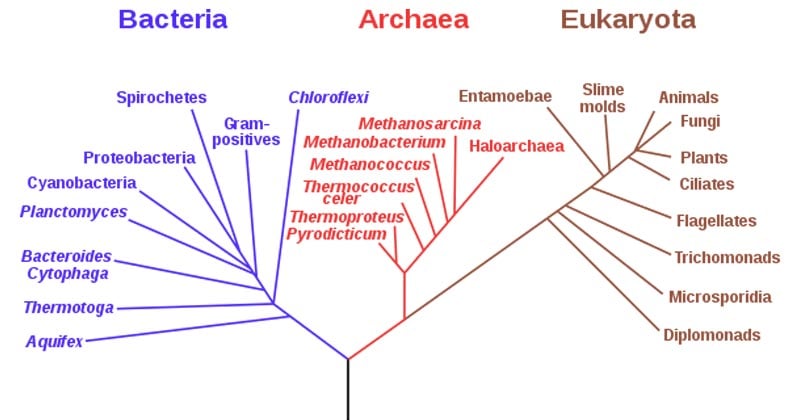
The application of a genetic approach rather than similarities based on morphology has revolutionized the evolutionary study as these rRNA genes, that are universally distributed and conserved in every organism have helped to trace our ancestors and apprehend the point of diversification of life.
RELATED POSTS
View all


What is Endosymbiotic Theory???
May 13, 2024 | by Bloom Code Studio
1.Domain Bacteria (Kingdom: Eubacteria (True bacteria))
May 13, 2024 | by Bloom Code Studio
3. Domain Eukarya
May 13, 2024 | by Bloom Code Studio