

3. Domain Eukarya
May 13, 2024 | by Bloom Code Studio

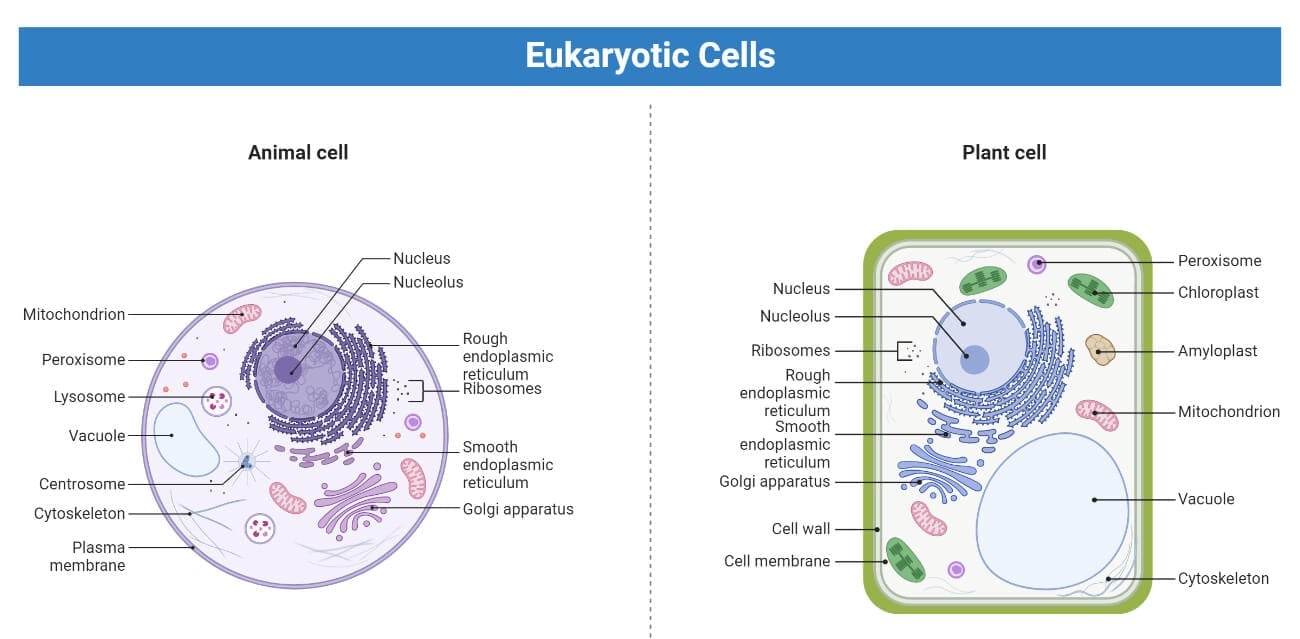
Eukarya is the only domain that represents multicellular, nucleated, and visible organisms with distinct membrane-bound cell organelles although single-celled eukarya also exist. These lack peptidoglycan in their cell envelope and have distinct rRNA from bacteria and archaeans. The presence of a double-membrane nucleus with pores, allows DNA enclosed within to move in and out of it. Cell division involves the process of mitosis and cytokinesis. These generally show two modes of reproduction: mitosis and meiosis as means of asexual and sexual reproduction. Besides these, it’s characterized by the complex cellular organization with unique features that include the endoplasmic reticulum, acidified vacuoles, Golgi complex, eukaryotic telomeres, 9+2 flagellar apparatus, mitotic spindle formation, and presence of specific genes and proteins like tubulins, actin, myosin, calmodulin, etc. It’s further subdivided into four kingdoms namely:
- Kingdom Protista
These are unicellular eukaryotes except the brown algae, which is multicellular and reproduce asexually and sexually by cell fusion and zygote formation. Examples: Slime molds, Chrysophytes, Dinoflagellates, Euglenoids, and Protozoans.
- Kingdom Fungi
These are multicellular, heterotrophic eukaryotes having specialized cell walls made of chitin and reproduce sexually, asexually, and vegetatively. However, some fungi such as yeasts are unicellular. Examples: Mucor, Aspergillus, Agaricus, etc.
- Kingdom Plantae
It includes all multicellular, autotrophic eukaryotic organisms except some that are partially heterotrophic such as insectivorous plants or parasites. Their cell walls are mainly made of cellulose and are non-motile. Their lifecycle exhibits a phenomenon referred to as alternation of generation.
- Kingdom Animalia
It includes multicellular, heterotrophic eukaryotic organisms. They lack cell walls, are motile, and demonstrate the sexual mode of reproduction by the copulation of male and female followed by embryological development.
In the 1960s, a theory called the Endosymbiotic theory was proposed by the scientist Lynn Margulis to define the origin of organelles such as mitochondria and chloroplasts within the eukaryotic cells from prokaryotic cells.
RELATED POSTS
View all


3 Domains of Life (Bacteria, Archaea, Eukarya)
May 13, 2024 | by Bloom Code Studio
Characteristics of three domains
May 13, 2024 | by Bloom Code Studio
1.Domain Bacteria (Kingdom: Eubacteria (True bacteria))
May 13, 2024 | by Bloom Code Studio