

1.Domain Bacteria (Kingdom: Eubacteria (True bacteria))
May 13, 2024 | by Bloom Code Studio

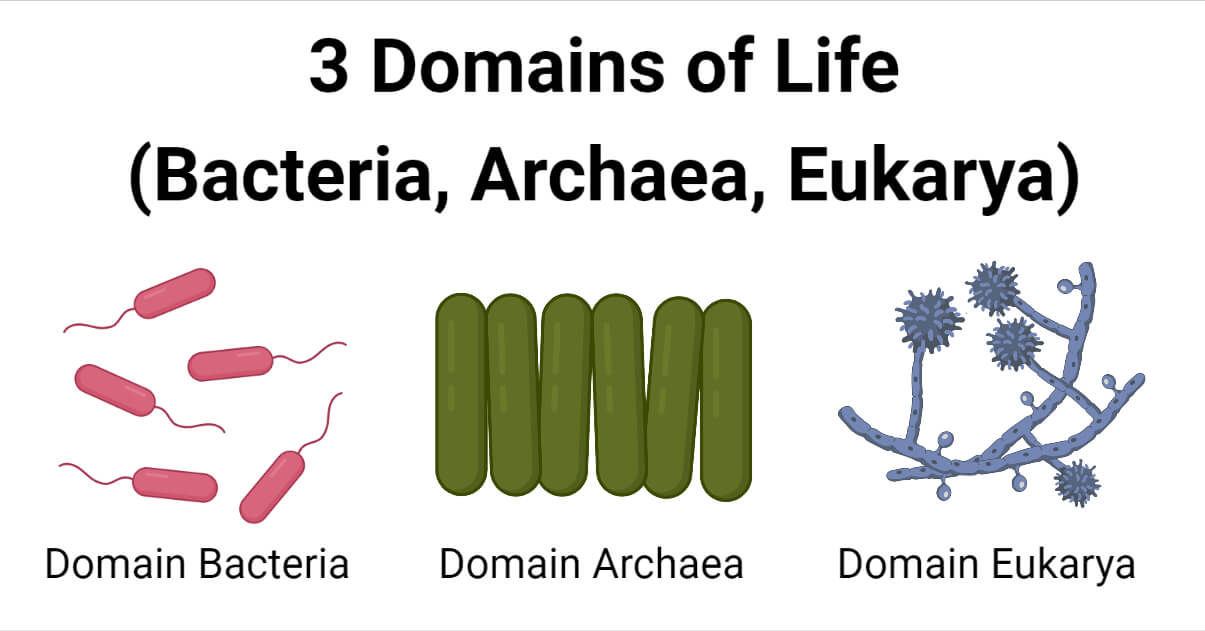
Bacteria are unicellular prokaryotic microscopic organisms. Their unique feature covers the presence of peptidoglycan in the cell wall unlike the Archaea and Eukarya, membrane composed of unbranched fatty acid chains attached to glycerol by ester linkages and their unique rRNA type. Examples: Cyanobacteria, Mycoplasmas, Gram-Positive bacteria, and Gram-negative bacteria. These are sensitive to most antibacterial antibiotics however show resistance against antibiotics that affect Eukarya. They show the asexual mode of reproduction. Generally, these are pathogenic but some are part of essential microbiota such as commensals. Such commensals play a vital role in digestion and absorption of foods, preventing pathogen colonization, activation of the immune system, and many more.
Bacteria are considered to be the primary decomposers of the natural ecosystem. These are grouped into five categories:
- Cyanobacteria: Blue-green algae capable of carrying out photosynthesis are termed cyanobacteria.
- Chlamydiae: Parasitic bacteria such as Chlamydia trachomatis and Chlamydophila pneumoniae that reproduce within host’s cells comprises chlamydiae.
- Firmicutes: Clostridium, Bacillus, and Mycoplasmas are Gram-positive bacteria belonging to firmicutes.
- Proteobacteria: It is a phylum of Gram-negative bacteria which are further classified as alpha-, beta-, gamma-, delta-, and epsilon proteobacteria. These form the part of normal human microbiota as well as many pathogens,
- Spirochetes: These have long, helically coiled cells with distinctive diderm (double-membrane) exhibiting a twisting motion with their axial filaments. For example: Borrelia, Leptospira, Treponema, etc.
RELATED POSTS
View all


Characteristics of three domains
May 13, 2024 | by Bloom Code Studio
3. Domain Eukarya
May 13, 2024 | by Bloom Code Studio
What is Endosymbiotic Theory???
May 13, 2024 | by Bloom Code Studio