

Heterotrophs Definition
May 17, 2024 | by Bloom Code Studio

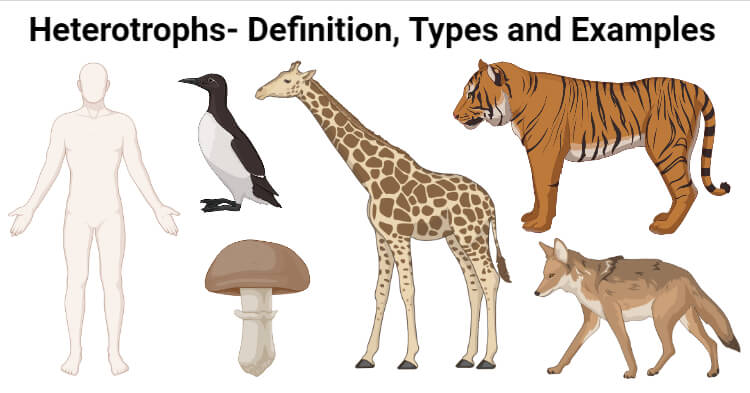
Heterotrophs are organisms that do not produce their food and depend on other organisms for their food and energy.
- Heterotrophs are a group of organisms that are distinct from autotrophs that prepare their own food as well as provide food to the heterotrophs.
- The term heterotroph is composed of two words; ‘hetero’ meaning others and ‘troph’ meaning food, indicating that these organisms depend on other organisms for food.
- Heterotrophs are also called consumers in the ecosystem as these consume food prepared by autotrophs and form the higher trophic levels in the food chain.
- Unlike autotrophs, heterotrophs do not have systems for the reduction of carbon sources. These organisms take up the complex biomolecules from the producers and break them down into simpler components with the help of different enzymes.
- Heterotrophs obtain the reduced organic compounds from autotrophs and oxidize them to produce energy.
- Even though most heterotrophs depend on autotrophs for energy as well as food, there are some heterotrophs that acquire energy from solar energy or chemical reactions.
- Heterotrophs are important in the ecosystem as these make up a lot of biomass and are responsible for the transfer of energy and biomass through the food chain.
- Heterotrophs can be classified as different groups of consumers as primary, secondary, and tertiary consumers. Heterotrophs also make up the decomposers in the food chain that feed on the dead and decaying biomass in the environment.
- Different groups of heterotrophs have different complexities and systems that enable them to acquire energy and food from autotrophs.
RELATED POSTS
View all


Examples of Heterotrophs
May 17, 2024 | by Bloom Code Studio
Types of Heterotrophs based on electron source
May 17, 2024 | by Bloom Code Studio
Heterotrophs in the Food Chain
May 17, 2024 | by Bloom Code Studio