

Sexual Reproduction in Animals
May 17, 2024 | by Bloom Code Studio

Almost all animals have the capacity to reproduce sexually. Only a few animals, mainly lower invertebrates and a few vertebrates, reproduce asexually together with the asexual mode. Most multicellular animals show exogamy with anisogamous gametes. Most the unicellular animals follow conjugation as a sexual mode of reproduction.
For sexual reproduction, there must be a male-producing sperm (male gamete) and a female-producing ova/egg (female gamete). Most of the higher animals have distinct sexual dimorphism, but male and female of some invertebrates and some vertebrates look alike.
The process of sexual reproduction can be described in the following stages:
1. Gametogenesis in Animals
It is the process of production of gametes. The male gamete is called spermatozoa (sperm), and the female gamete is called the ova (egg).
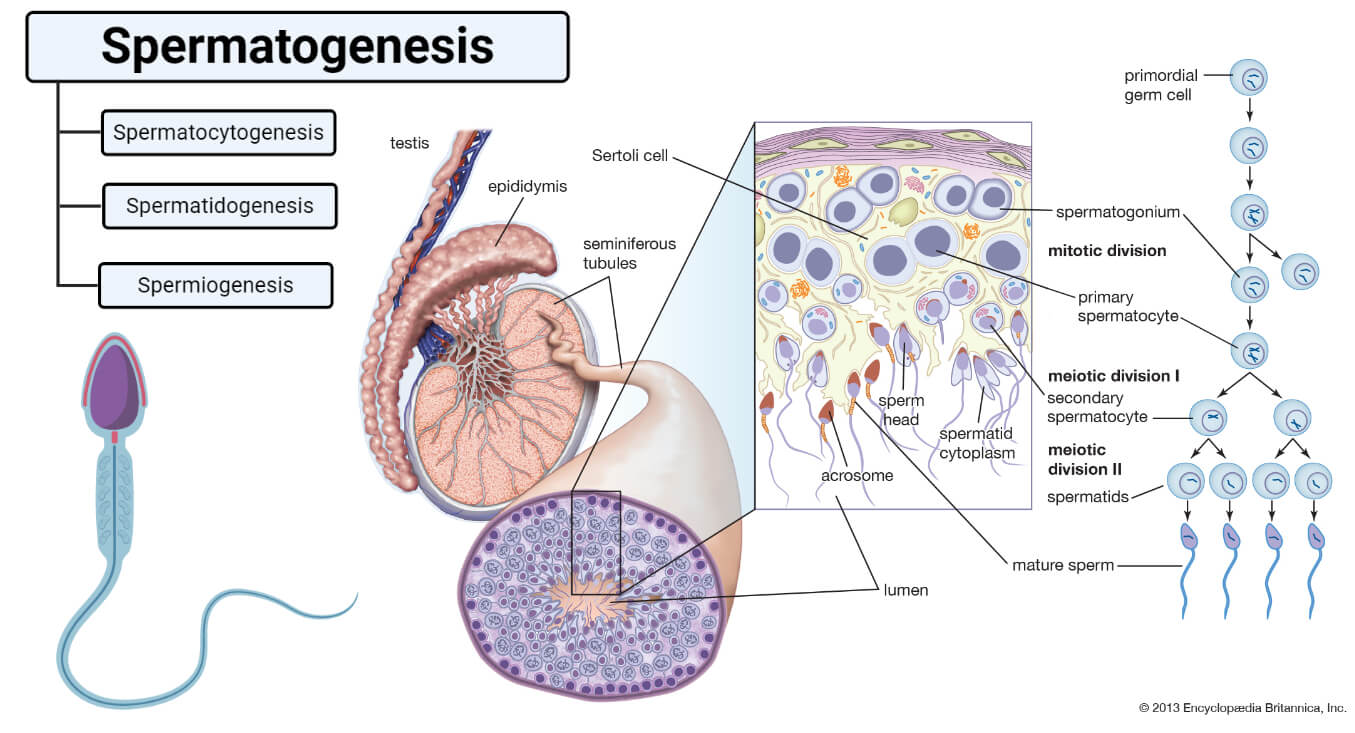
Sperm are formed inside the testes, the male reproductive organ. Inside the testes is a coiled seminiferous tubule whose internal lining is of stem/germ cells (spermatogonia). These diploid spermatogonia undergo meiotic division to form 4 haploid spermatids. Each spermatid develops into a sperm. This process is called spermatogenesis.
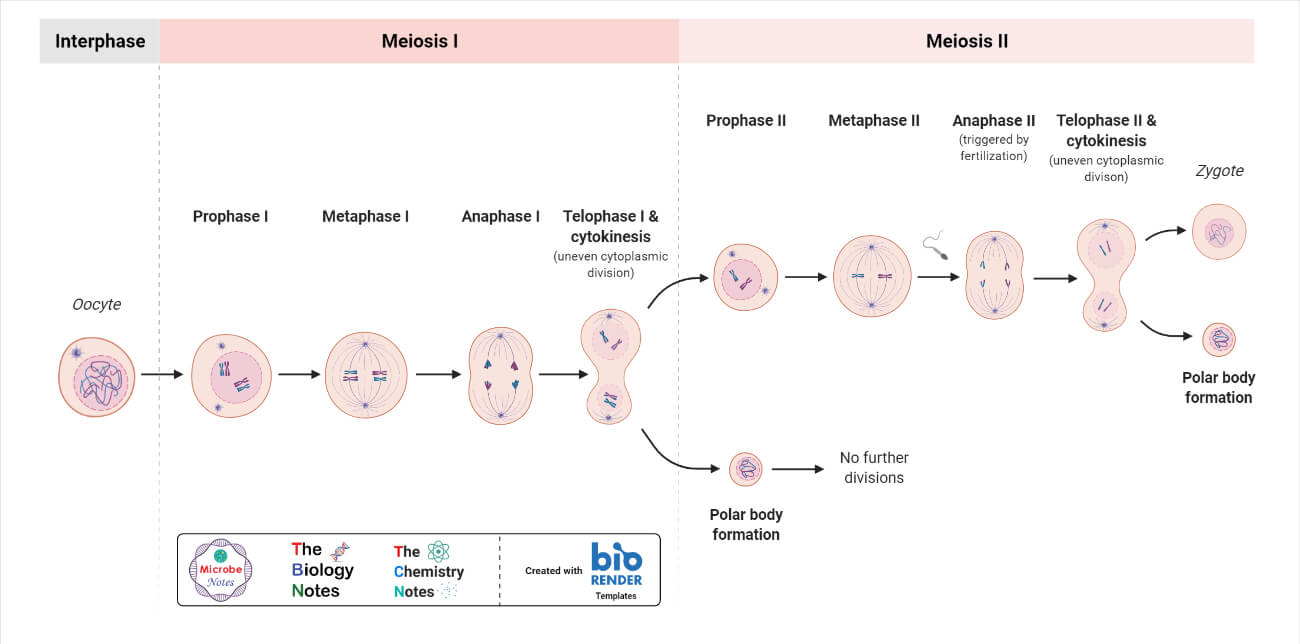
The egg or ova is formed inside the ovary, the female reproductive organ. The ovary contains diploid primary germ cells (oogonia) which will divide mitotically to form primary oocytes and increase their number. The primary oocyte undergoes 1st meiotic division resulting in one smaller haploid cell called the first polar body, and a larger haploid cell called the secondary oocyte. The first polar body generally degenerates and dies. The secondary oocyte further undergoes the 2nd meiotic division forming one smaller haploid cell called the second polar body, and a larger haploid cell called the ootid. The ootid matures and forms the ovum. This process is called oogenesis.
2. Fertilization in Animals
It is the fusion process of sperm and an ovum producing an embryo. In animals, fertilization may be internal or external.
Internal Fertilization
In this process, the fusion of sperm and ovum occurs inside the female’s body. Copulation occurs before the fertilization process. In copulation, male and female unite, and the male introduces sperm inside the female’s reproductive system. The sperm travel along the female reproductive tract and fuses with mature ovum, fertilizing them.
It is seen in viviparous, oviparous, and ovoviviparous animals, like mammals, sharks, birds, insects, etc.
External Fertilization
In this process, the fusion of sperm and ovum occurs outside the female’s body, i.e. in the external environment, mostly in water. Copulation does not occur in the process. It is seen in some oviparous animals like fishes, amphibians like frogs, toads, and a few insects.
c. Hatching or Birth of Baby
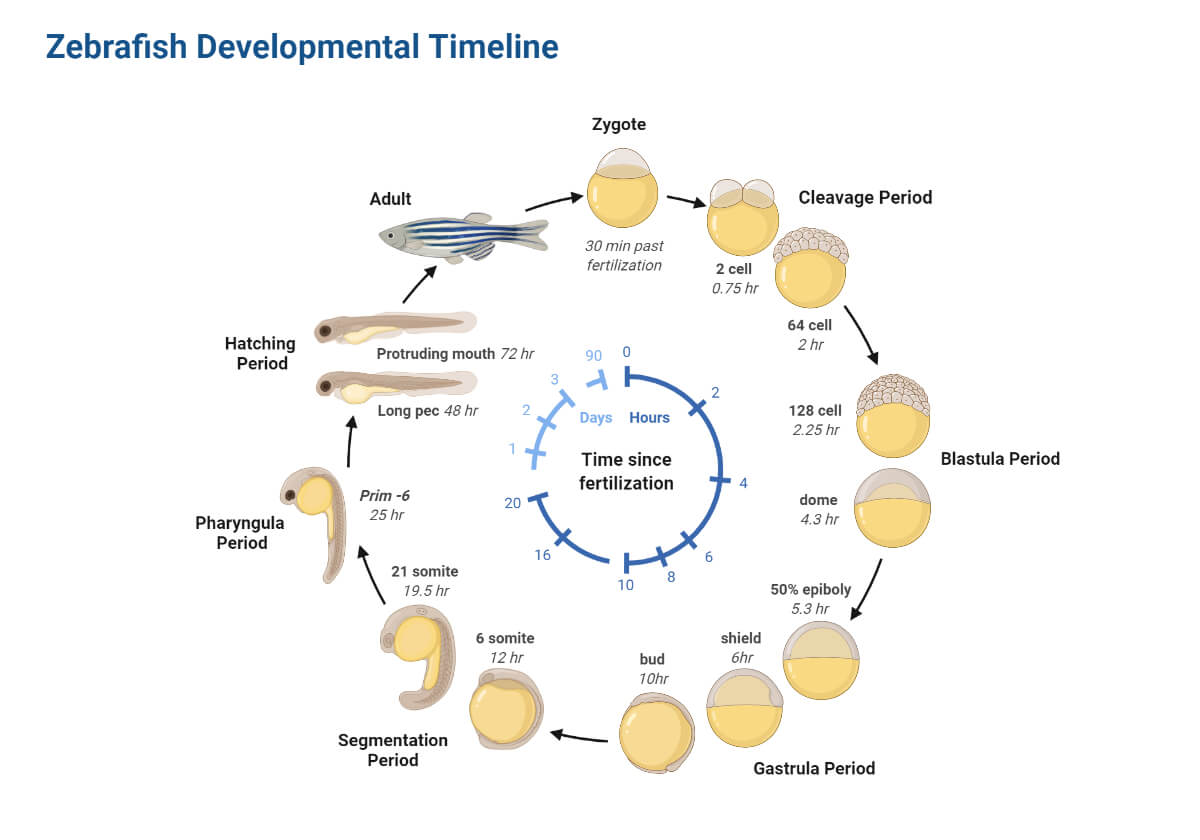
Animals may directly give birth to a baby or may lay an egg that will later hatch releasing a baby. Based on this mode of reproduction (i.e., whether the development of the embryo and hatching of the young takes place internally or externally in the mother’s body) animals may be classified into; Oviparous, Viviparous, and Ovoviviparous animals, and the mode of reproduction into Oviparous, Viviparous and Ovoviviparous mode of reproduction accordingly.
- Oviparous Animals
Those animals which lay an egg containing undeveloped and immature embryos in the environment (i.e. outside the body) are called oviparous animals. In the external environment, the embryo develops further within the egg and the baby hatches out on maturation. This mode of reproduction is seen in all the invertebrates, fishes, amphibians, reptiles, and birds.
- Viviparous Animals
Those animals which directly give birth to a young baby are called viviparous animals. In this mode, the embryo develops inside the female’s (mother’s) reproductive system, mostly in the uterus, and develops into a fetus and a mature young baby. Then, the baby is given birth out in the environment. It is seen in all mammals.
- Ovoviviparous Animals
It is a special reproduction strategy in animals where eggs are laid, developed, and hatched, releasing young ones inside the mother’s body. Once hatched, the young babies are nourished inside the female body and given birth to babies when they mature.
Their difference from viviparous animals is that there is no umbilical cord and they are nourished with the yolk but not via the placental appendages.
It is seen in some sharks, snakes, amphibian toads, and salamanders.
RELATED POSTS
View all


Sexual Reproduction Features
May 17, 2024 | by Bloom Code Studio
Sexual Reproduction Disadvantages
May 17, 2024 | by Bloom Code Studio
Sexual Reproduction Types
May 17, 2024 | by Bloom Code Studio