

Photosynthesis Limiting Factors
May 13, 2024 | by Bloom Code Studio

Light as Photosynthesis Limiting Factors
Photosynthesis does not occur in the absence of light, hence there is no photosynthesis during night hours but only during day hours. There are three attributes of sunlight of importance in photosynthesis which includes intensity, quality, and duration of exposure to light.
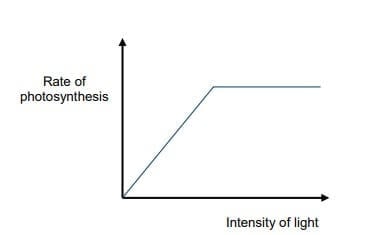
- The intensity of light regulates the rate of the photosynthetic process.
- Photosynthesis initiates at a low light intensity and the rate increases till high-intensity light in bright daylight is reached.
- Even though plants only need 1.5% light to perform photosynthesis, at lower intensities, this can become a limiting factor despite the presence of sufficient carbon dioxide and water.
- Plants kept for a longer period in high-intensity light cause increased transpiration due to a rise in the plant’s internal temperature causing the stomata to close.
- Closed stomata cannot take up CO2 hence reducing photosynthesis. Thus excessive light inhibits photosynthesis.
- If the internal temperature of plants is balanced, the plants exposed to sunlight for a longer duration lead to more photosynthesis.
- Chlorophyll absorbs red and blue wavelengths of light most effectively from the light spectrum.
Carbon Dioxide as Photosynthesis Limiting Factors
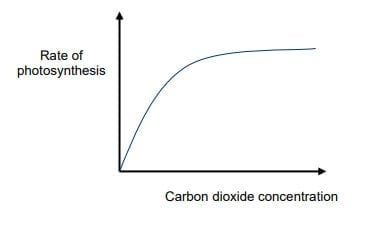
Carbon dioxide as a gaseous molecule is very less in the atmosphere with only 0.03% among other atmospheric gases. This causes less availability and scarcity of CO2 for plant consumption, making it a limiting factor for photosynthesis. Experiments have suggested that increasing carbon dioxide concentration causes a photosynthetic rate to increase if light and temperature are not limiting factors. But CO2 starts accumulating after a certain limit and slows down the photosynthetic process and may also inhibit it.
Water as Photosynthesis Limiting Factors
Even though water is abundant in nature but its distribution varies among regions. Their effect is indirect in photosynthesis. When water uptake is low due to less availability, the stomata present in the leaves or stems begin to close to avoid water loss due to transpiration. Closing of stomata leads to reduced carbon dioxide uptake, hence decreasing the rate of photosynthesis.
Temperature as Photosynthesis Limiting Factors
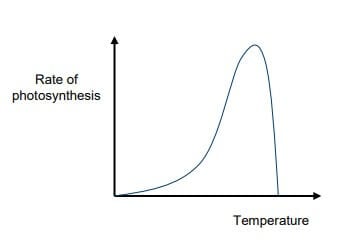
All biochemical and biological processes occur at an optimum range of temperature in all living organisms. Photosynthesis is also a biological process and the photosynthetic rate has been observed to rise over a temperature range of 6 to 37 degrees Celcius. The plant tissues die at 43 degrees Celcius, so there is an abrupt fall in photosynthesis. Higher temperatures also cause the denaturation of proteins, and the inactivation of enzymes involved, alternatively regulating enzymatic dark reaction of photosynthesis. Above 25-30 degrees Celsius, the rate of photosynthesis is reduced.
RELATED POSTS
View all


Photosynthesis Limiting Factors (Factors Affecting)
May 13, 2024 | by Bloom Code Studio
What is Photosynthesis?
May 13, 2024 | by Bloom Code Studio