

Plant Tissue Culture: Definition, Media, Steps, Types, Uses
May 13, 2024 | by Bloom Code Studio

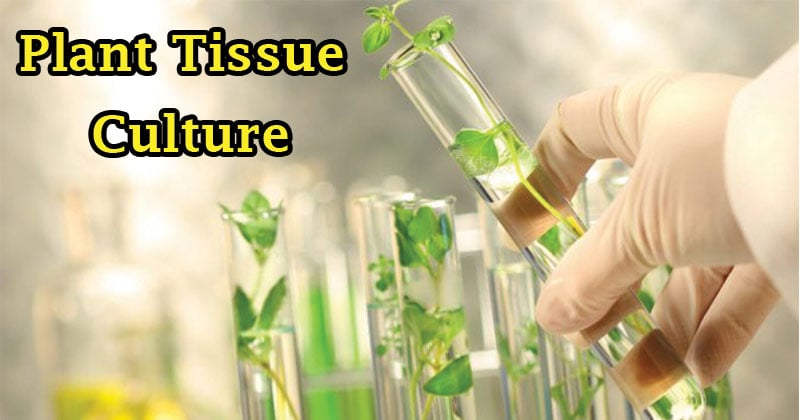
Plant tissue culture is the in-vitro aseptic culture of cells, tissues, or whole plants under controlled nutritional and environmental conditions, often to produce clones of plants.
The technique primarily relies on plant cells’ totipotency which is the capacity of a single cell to express the whole genome during cell division. The ability of cells to change their metabolism, growth, and development is just as significant and essential for the regeneration of the entire plant.
Plant tissue culture technology is being widely used for large-scale plant multiplication. In addition to being used in research, they are now essential for plant propagation, disease eradication, and the generation of secondary metabolites.
Plant Tissue Culture History
Gottlieb Haberlandt, in 1902 tried to cultivate individual palisade cells from leaves in knop’s salt solution supplemented with sucrose. The cells sustained for a month stored starch but ultimately did not divide. Despite his failure, he is considered the father of plant tissue culture since his experiment set the stage for developing tissue culture technology. Similarly, Roger J. Gautheret, a French scientist, had encouraging results with culturing cambial tissues of carrots in 1934.
RELATED POSTS
View all


Advantages of Plant Tissue Culture
May 13, 2024 | by Bloom Code Studio
Acclimation / Acclimatization
May 13, 2024 | by Bloom Code Studio
Plant Tissue Culture Conditions
May 13, 2024 | by Bloom Code Studio