

Apex Predators- Definition, Trophic Cascade, Examples
May 13, 2024 | by Bloom Code Studio

Apex predators are commonly referred to as the top predators in the ecological food chain. They bear the top-most rank in the herbivore-carnivore food chain, lacking any natural enemy or predator.
These flesh-eating animals occupy the uppermost spot Trophic Energy Pyramid of the Ecosystem, marking the last destination for the energy flow in any given biological community. Their influence greatly impacts population dynamics and the biodiversity of prey species and fellow predators in the ecological community. They also participate in regulating the disease of the general population.
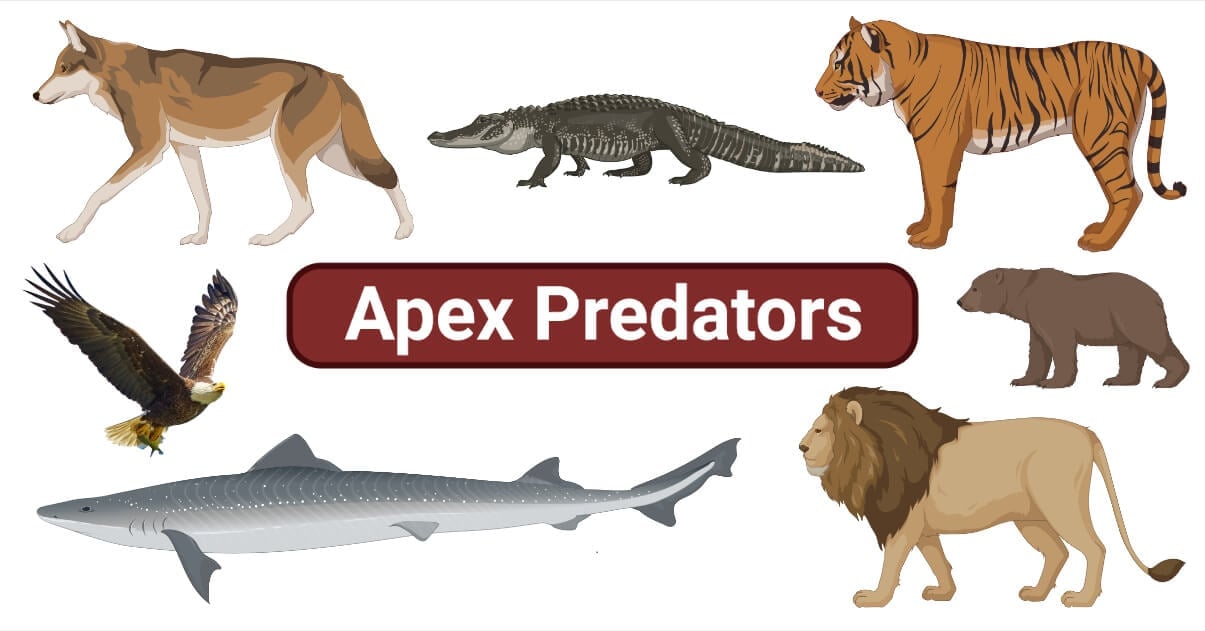
Apex predators flourish in both terrestrial and aquatic environments. Some examples of apex predator species in the terrestrial environment include the largest member of the Felidae (cat) family such as Puma concolor (Puma), Panthera leo (Lion), Panthera tigris (Tiger) and others; birds of prey like vultures, condor, etc.
Ecological traits such as reproductive rates, population territory, infanticide, prey density, etc., profoundly impact these predators. Large carnivores weighing above 34 kg show slow reproduction rates, extended parental care to the offspring, and sparsely distributed populations. In contrast, the smaller carnivores have faster reproduction rates, thus leading to higher population density in the ecosystem. Self-regulation and prey dynamics play a significant role in the conservation of resources for these apex predators to flourish and balance the surrounding ecosystem.
RELATED POSTS
View all


Conclusion
May 13, 2024 | by Bloom Code Studio
Keystone Species as Apex Predators
May 13, 2024 | by Bloom Code Studio
Conservation of Apex Predators
May 13, 2024 | by Bloom Code Studio