

Characteristics of Theria
May 13, 2024 | by Bloom Code Studio

Live birth and nurturing of young through mammary glands
Theria mammals give birth to live young instead of laying eggs. They nourish their offspring through mammary glands, which produce milk for feeding. The reproductive strategy allows for direct parental care and the survival and development of the young.
Key anatomical and physiological features
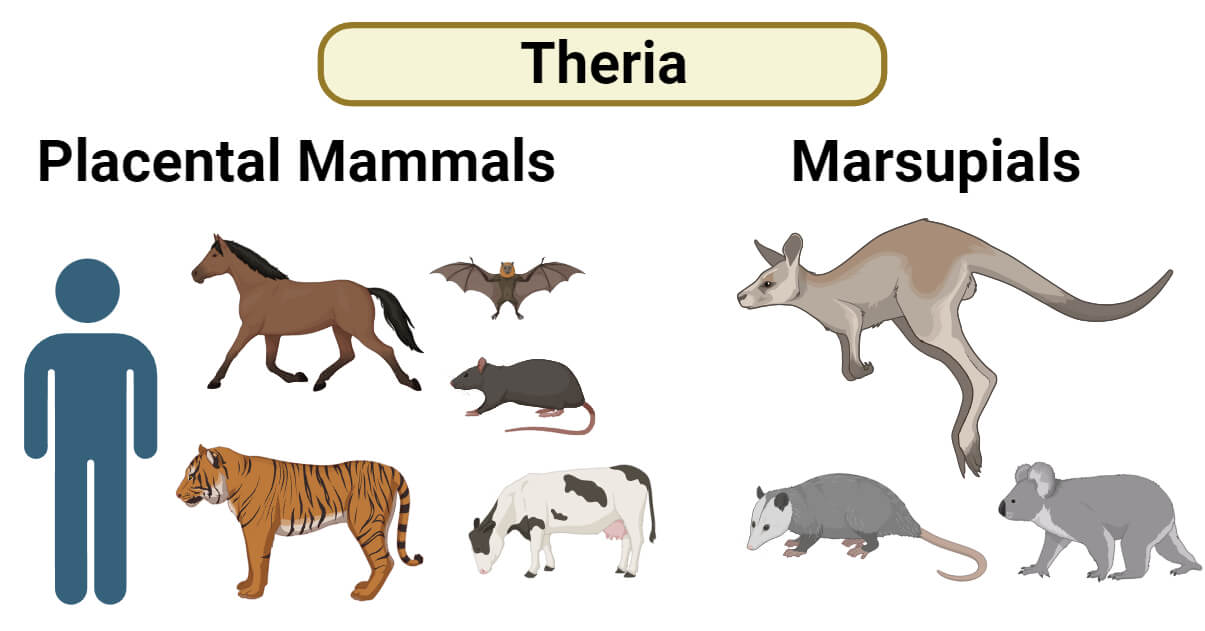
- Development of a placenta in placental mammals: Placental mammals have evolved a specialized organ called the placenta. The placenta develops during pregnancy and facilitates the exchange of nutrients and waste products between the mother and the developing fetus. This adaptation allows for more extended gestation periods and the birth of more developed young.
- Unique reproductive strategies in marsupials: Marsupials, another group, have distinct reproductive strategies. They give birth to relatively undeveloped young, continuing their development outside the womb. The underdeveloped young crawl into a pouch on the mother’s abdomen, where they attach to a nipple and receive nourishment until they are more mature and independent.
RELATED POSTS
View all


Theria: Characteristics, Diversity, Types, Examples
May 13, 2024 | by Bloom Code Studio
Evolutionary History of Theria
May 13, 2024 | by Bloom Code Studio
Diversity of Theria
May 13, 2024 | by Bloom Code Studio