

Climax Community: Characteristics, Stages, Factors
May 13, 2024 | by Bloom Code Studio

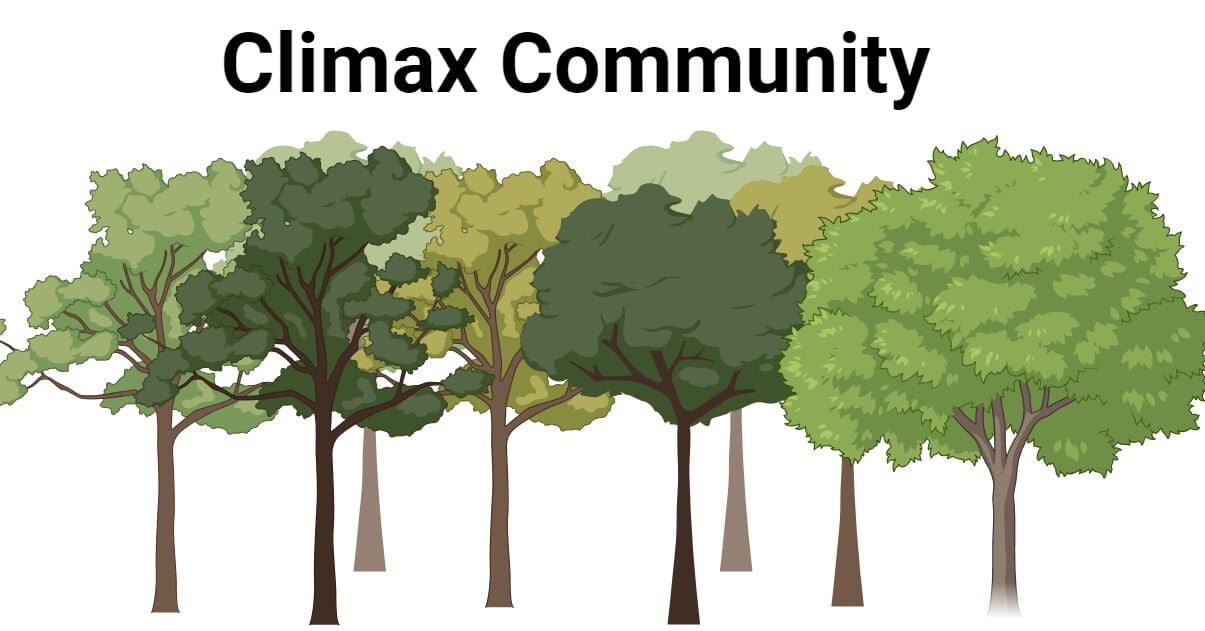
The climax community represents a stable and harmonious state within an ecosystem, where the species and their interactions are balanced, resembling a well-rehearsed performance.
- The climax community comprises specific species uniquely adapted to the environment, playing distinct roles in maintaining the community’s stability and functioning.
- The community displays a complex structure with various layers and niches, contributing to its biodiversity and resilience, like a diverse neighborhood with different housing types and residents.
- Due to its diverse species and robust structure, the climax community is resilient. It can adapt to minor disturbances without significant shifts in its balance.
- Understanding and preserving climax communities are crucial for maintaining overall ecosystem health and sustainability, as they serve as benchmarks for assessing the impacts of human activities and natural events on ecosystems.
Ecological succession is like nature’s story of growth and change in an area. Imagine an empty plot of land. Over time, different plants and animals come and go, gradually transforming the area. This process of change is what we call ecological succession.
Primary succession happens in areas without life, like a freshly cooled lava field or a bare rock. Life starts from scratch, with pioneer species like lichens and mosses paving the way for larger plants and animals.
Secondary succession, on the other hand, occurs in areas where life existed before but was disrupted, like after a forest fire or when land is cleared for farming. Here, existing soil and seeds allow life to regrow and evolve.
RELATED POSTS
View all


Characteristics of a Climax Community
May 13, 2024 | by Bloom Code Studio
Factors Influencing the Development of a Climax Community
May 13, 2024 | by Bloom Code Studio