

Stages of Primary Succession
May 13, 2024 | by Bloom Code Studio

Primary succession occurs in multiple stages, transitioning from the pioneer and intermediate species to a stable community. This change from a barren, lifeless area to a lively environment can take a long time, depending on the habitat conditions and the species characteristics.
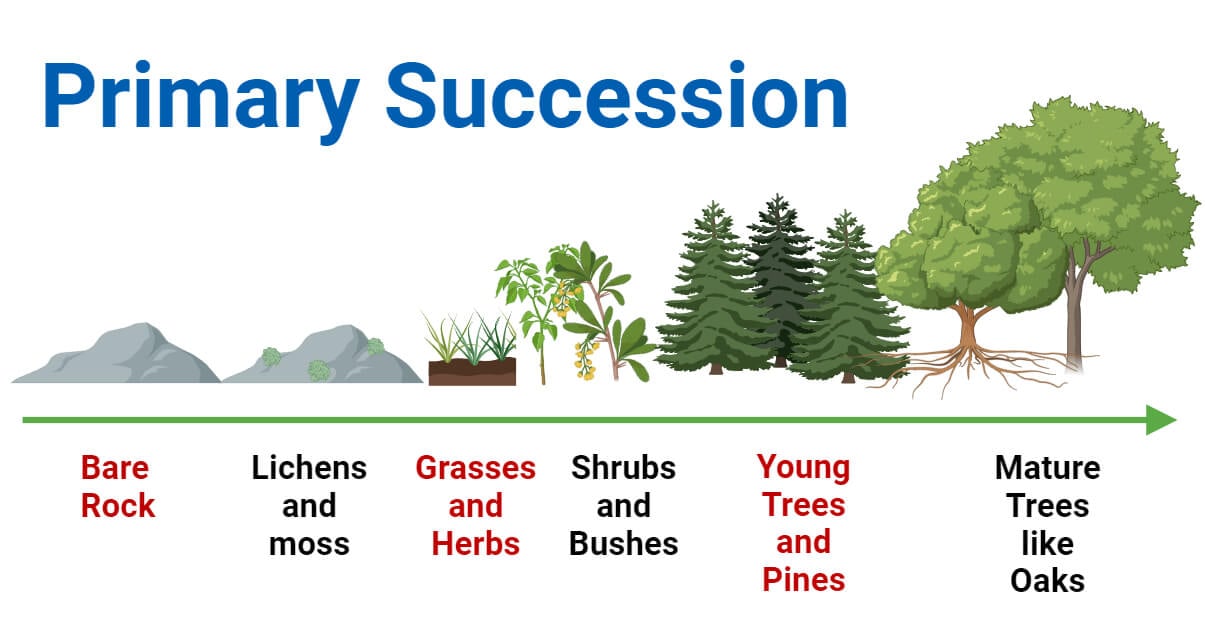
The stages of primary succession are explained below:
- Barren land: Primary succession takes place in an environment that has never sustained complex life forms. Common settings for primary succession include surfaces like bare rock, lava, or sand that lack nutrient-rich soil, making them initially unsuitable for the survival of plants and animals. While primary succession predominantly occurs on land, it can also take place in oceanic regions where lava has reached.
- Pioneer species: The barren land is initially colonized by pioneer species. Pioneer species, along with abiotic factors like wind and water, play a vital role in breaking down rocks and increasing nutrient levels for the survival of other species. Lichens, moss, algae, fungi, and coral are examples of pioneer species. These organisms are adapted to grow on rocks and exposed land, thriving in harsh conditions.
- Annual herbaceous plants: As pioneer species die and decompose, they create organic material that creates pockets of soil, allowing for the emergence of annual herbaceous plants such as ferns, grasses, and herbs. During this stage, small animals and insects also start colonizing the ecosystem.
- Perennial herbaceous plants: As soil formation progresses, more plants and animals thrive and complete life cycles, improving soil quality. Bigger plants like perennials begin to thrive in this stage.
- Shrubs: As the soil gets thicker and richer, it can support larger plants like shrubs. Shrubs start growing when the ground can support their root systems. These shrubs serve as a resource for animals, offering both food and shelter. Animals contribute to the ecosystem by transporting these shrubs and perennial seeds.
- Shade-Intolerant Trees: Then, the initial trees start appearing in this stage. They lack shelter from the sun and are typically short, showing tolerance to wind and extreme temperatures.
- Shade-Tolerant Trees: Trees and plants that prefer shade dominate the ecosystem in this stage. These trees replace and surpass some of the shade-intolerant trees, supporting a diverse range of plants and animals.
- Climax Community: This is the final and ultimate stage in the process of primary succession. It is characterized by stability and high species diversity. This stage represents the completion of primary succession.
RELATED POSTS
View all


What is a Primary Succession?
May 13, 2024 | by Bloom Code Studio
Importance of Primary Succession
May 13, 2024 | by Bloom Code Studio
Examples of Primary Succession
May 13, 2024 | by Bloom Code Studio