

Floral characters of the Solanaceae Family
May 13, 2024 | by Bloom Code Studio

- Inflorescence: Cymose type, solitary terminal (Datura) or solitary auxiliary (Petunia), panicle or a typically axillary cyme or extra axillary cyme
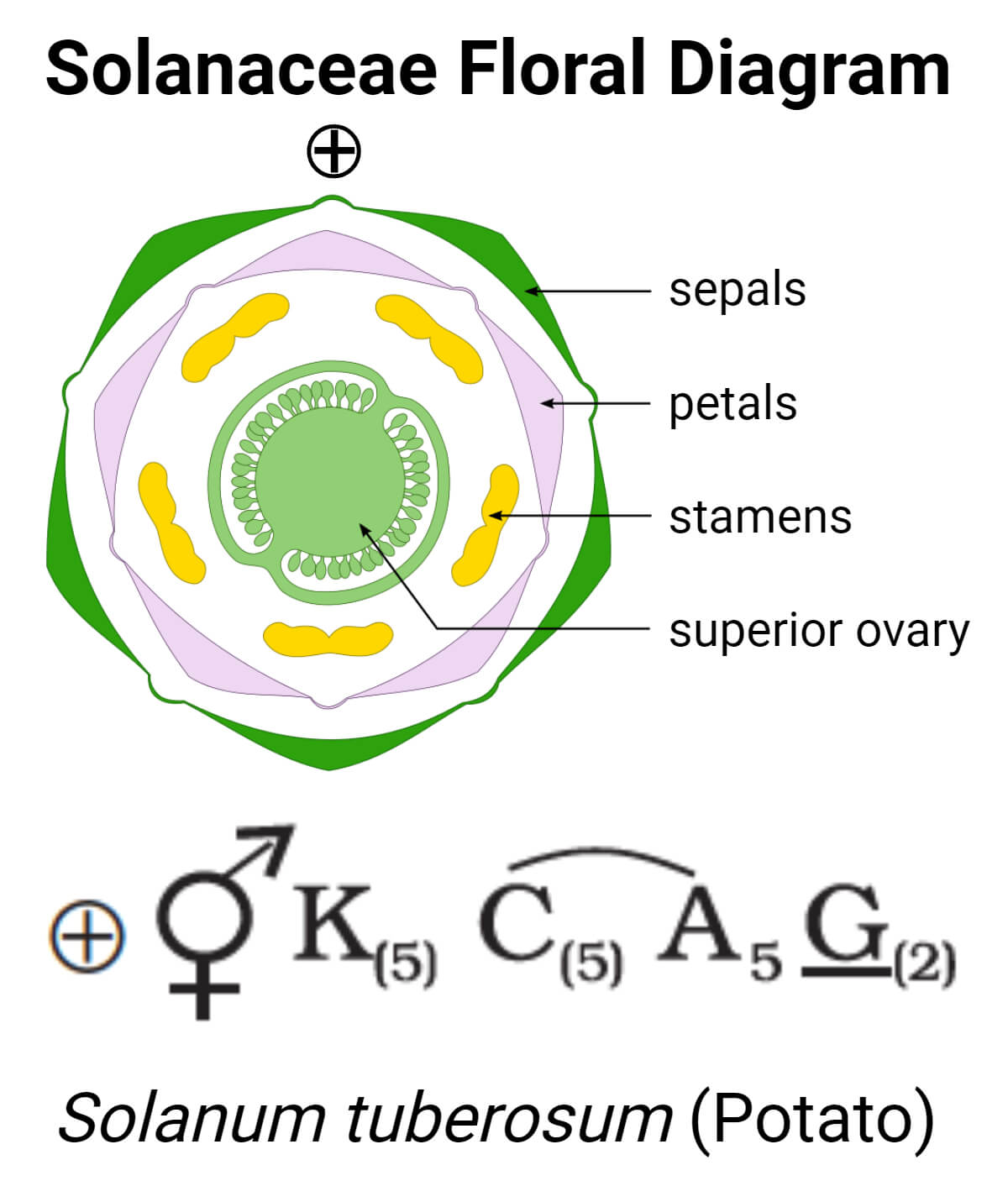
- Flower: Bisexual, complete, ebracteate, actinomorphic, cyclic
- Calyx: Sepals five, gamosepalous, imbricate or valvate aestivation, inferior, five-lobed or toothed
- Corolla: Petals five, gamopetalous, twisted or valvate aestivation, inferior
- Androecium: Stamens five, polyandrous, epipetalous, alternate to petals, anther dithecous, basifixed, introrse, inferior
- Gynoecium: Carpels two i.e. bicarpellary, syncarpous, bilocular, axile placentation, ovary superior and obliquely placed, single style, stigma bilobed or capitate
- Fruits: Capsule (Datura) or many seeded berry (tomato)
- Pollination: Cross, entomophilous
- Seed: Albuminous or endospermic embryo is curved or straight, two cotyledons
Floral Formula of Solanaceae Family
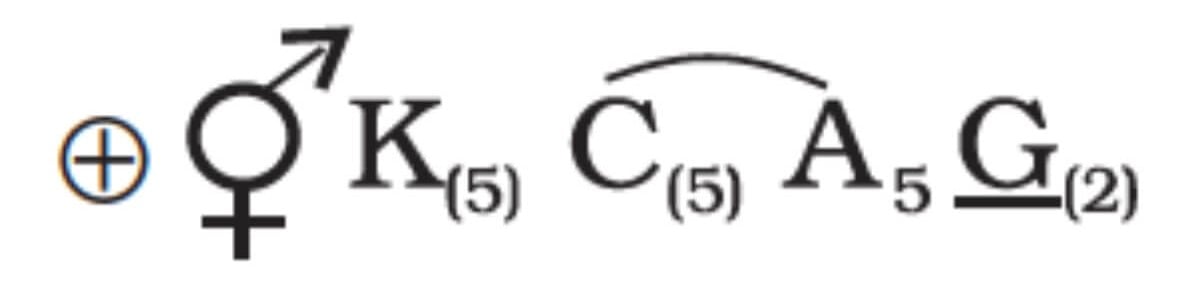
| ⊕ | Actinomorphic (radial symmetry) |
| ⚥ | Bisexual |
| K(5) | Calyx – 5 sepals, gamosepalous (united) |
| C(5) | Corolla – 5 petals, gamopetalous |
| A5 | Androecium – 5 stamens, polyandrous (free), epipetalous (attached to petals) |
| G(2) | Gynoecium – bicarpellary, syncarpous (united), superior ovary |
Floral Diagram of Solanaceae Family
RELATED POSTS
View all


Systematic Position of Solanaceae Family
May 13, 2024 | by Bloom Code Studio
Habit and Habitat of Solanaceae Family
May 13, 2024 | by Bloom Code Studio
Some common plants of the Solanaceae Family
May 13, 2024 | by Bloom Code Studio