


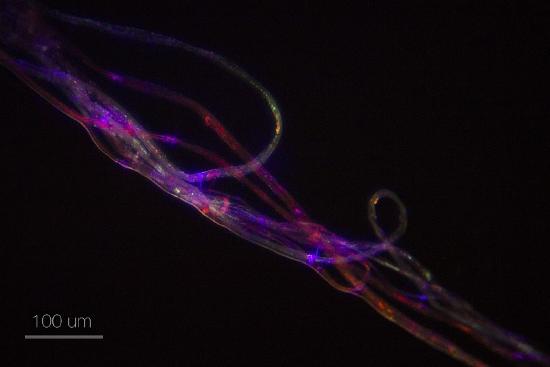
Water potential, transpiration, and stomatal regulation influence how water and nutrients are transported in plants. Water potential refers to the potential energy in water, and water moves towards the areas with the lowest water potential. Water is ultimately pulled to the top of the plant (cohesion-tension theory), and lost through transpiration through stomata. Complex mechanisms control stomatal opening and closure. Both adaptations that increase absorption of water through the roots (Figure ) and those that limit transpiration ensure that plants collect and retain enough water.
- 4.5.1.1: Water Potential Water potential is a measure of the potential energy in water. Water moves from high water potential to low water potential, which drives the flow of water in the plant.
- 4.5.1.2: Transpiration Transpiration refers to the loss of water vapor through plant stomata, mainly in the leaves. Hot, dry, and windy conditions increase transpiration rate.
- 4.5.1.3: Cohesion-Tension Theory According to the cohesion-tension theory, the main force that drives water up a plant is transpiration and cohesion and adhesion of water in the xylem.
- 4.5.1.4: Water Absorption Root hairs increase the surface area of roots to increase water absorption. Before entering the root vascular tissue, water and minerals pass through endodermal cells. The endodermis is reinforced by the Casparian strip, which prevents substances from moving between the cells. Water may move through an apoplast, symplast, or transmembrane pathway.
RELATED POSTS
View all

