Learning Objective
Identify the main external structures of the shoot system, including the nodes, internodes, leaves, axillary buds, and axillary shoots.
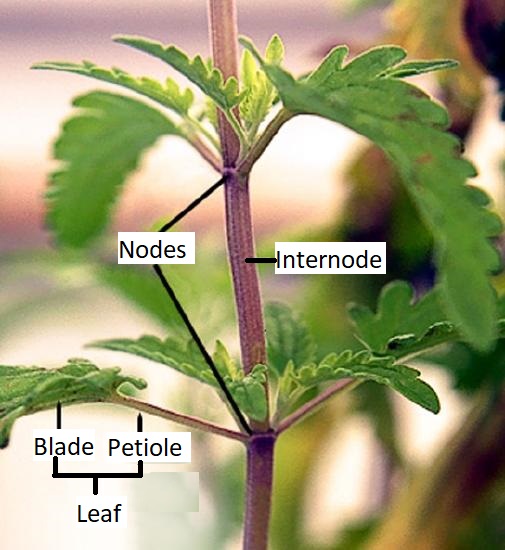
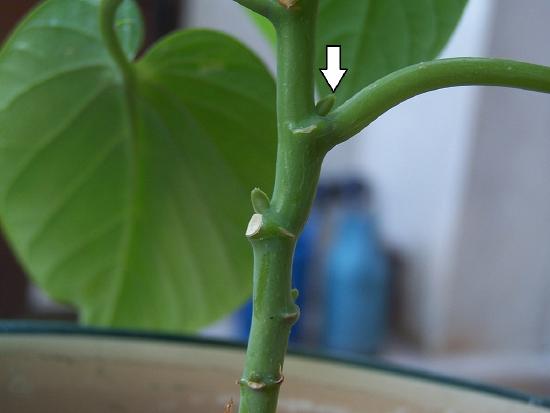
Plant stems, whether above or below ground, are characterized by the presence of nodes and internodes (Figure ). Nodes are points of attachment for leaves. Leaves often consist of a thin region that attaches to the stem (the petiole) and a broader blade (see Leaves). The stem region between two nodes is called an internode. An axillary bud is usually found in the axil—the area between the base of a leaf and the stem—where it can give rise to a branch called an axillary shoot (Figure ). The shoot apex at the tip shoot contains the shoot apical meristem surrounded by developing leaves called leaf primordia (see Meristems).