
Photosynthetic lineages can be found across the phylogenetic tree of protists. Most of the groups are unrelated to each other, as each major lineage acquired its chloroplast (and therefore the ability to photosynthesize) from different endosymbiotic events. For example, red and green algae belong to the same lineage (Archaeplastida). A red algal ancestor engulfed a cyanobacterial ancestor, leading to the first chloroplasts. These were inherited vertically–through reproduction and over evolutionary time–by the lineages of green algae. However, brown algae and diatoms inherited their chloroplasts from a secondary endosymbiotic event where their heterotrophic ancestor (something like an oomycete) engulfed a red alga. This is a horizontal transmission of chloroplasts between lineages, where genes (and here an organelle!) move between organisms through the environment, not through reproduction.
Endosymbiosis
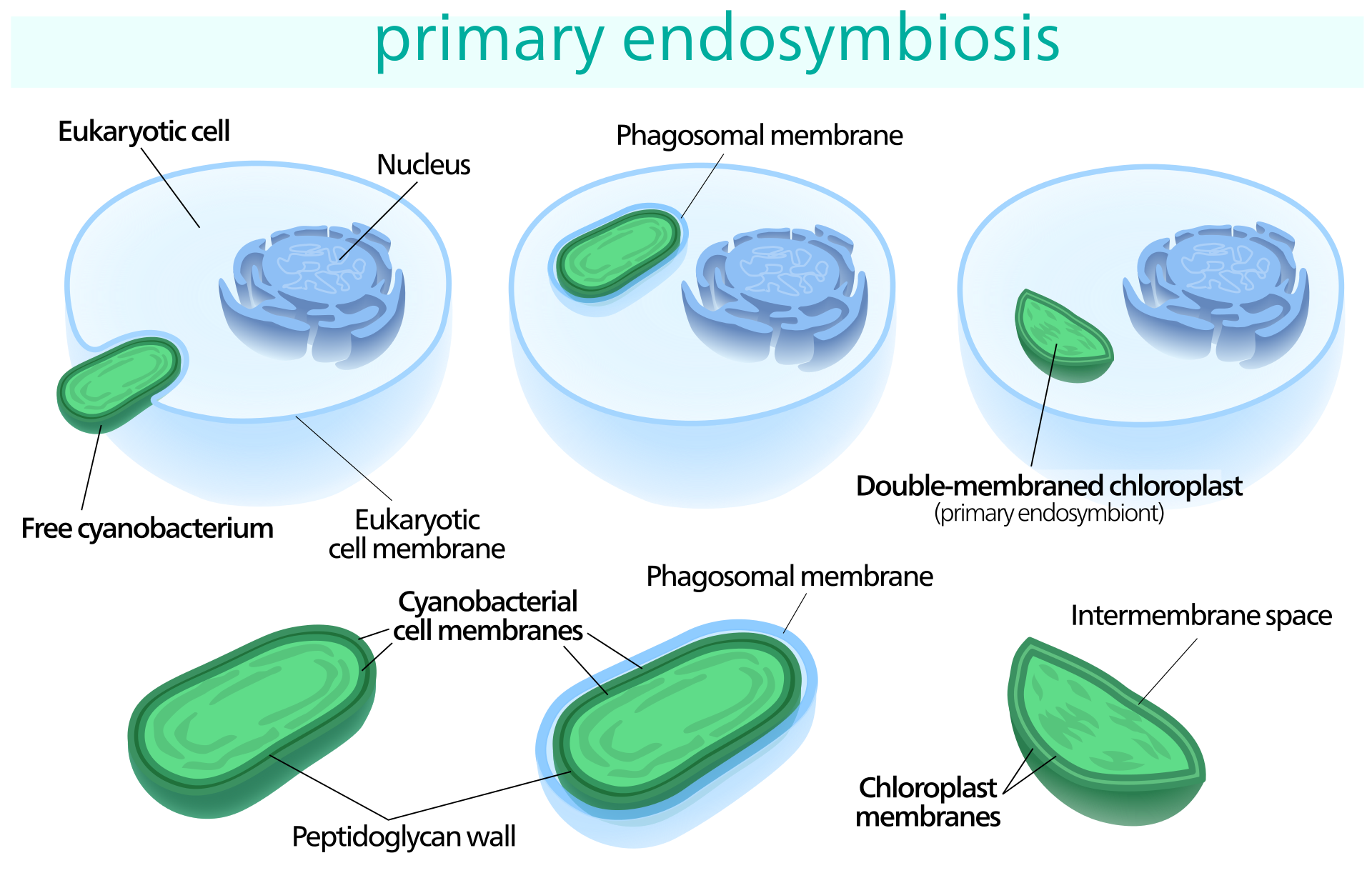
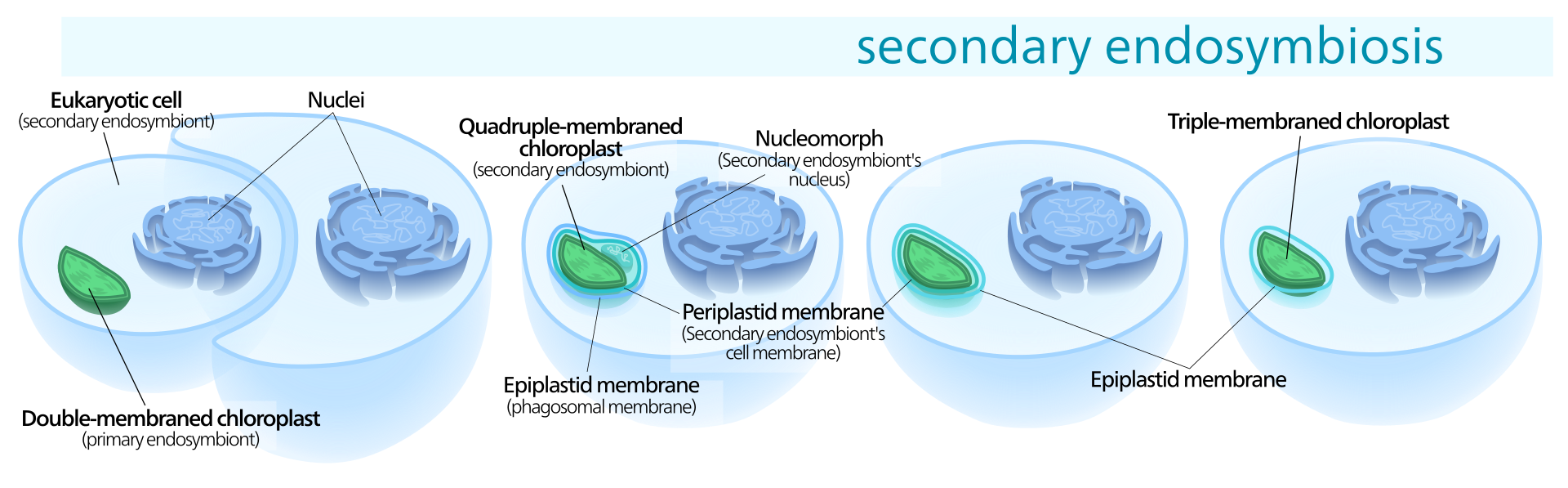
The horizontal transmission of chloroplasts between lineages via endosymbiosis resulted in several unrelated groups of photosynthetic protists. The lineages covered in this section are:
- Dinoflagellates (secondary endosymbiosis)
- Brown algae and diatoms (secondary endosymbiosis)
- Red and green algae (primary endosymbiosis)
- Topic hierarchy
2.4.3.3: Red and Green Algae Glaucophytes, red algae, and green algae are part of the Archaeplastida. These organisms are descended from the same primary endosymbiosis event. Glaucophytes are thought to be one of the earliest lineages to diverge due to the presence of remnant peptidoglycan between the membranes of its chloroplast-like cyanelles. Glaucophytes and red algae share the same pigments as Cyanobacteria, while green algae share the same pigments as plants.
2.4.3.1: Dinoflagellates Dinoflagellates are a group of morphologically and nutritionally diverse acquatic organisms, from the zooxanthellae that live inside coral polyps to the neurotoxin-releasing microbes that cause red-tides. They have essential roles in marine food webs.
2.4.3.2: Brown Algae and Diatoms Brown algae and diatoms are photosynthetic heterokonts. They both have a diplontic life cycle during some stage of which a cell will have heterokont flagella. They have 4-membraned chloroplasts that contain the pigments chlorophyll a, chlorophyll c, and fucoxanthin. This latter pigment gives the chloroplasts in these groups a golden color. This is about where the similarities end. They have different morphologies, habitats, cell wall composition, and storage carbohydrates.