
Learning Objectives
- Describe the root nodule symbiosis between plants and bacteria
- Explain why plants cannot get nitrogen from the nitrogen-rich atmosphere
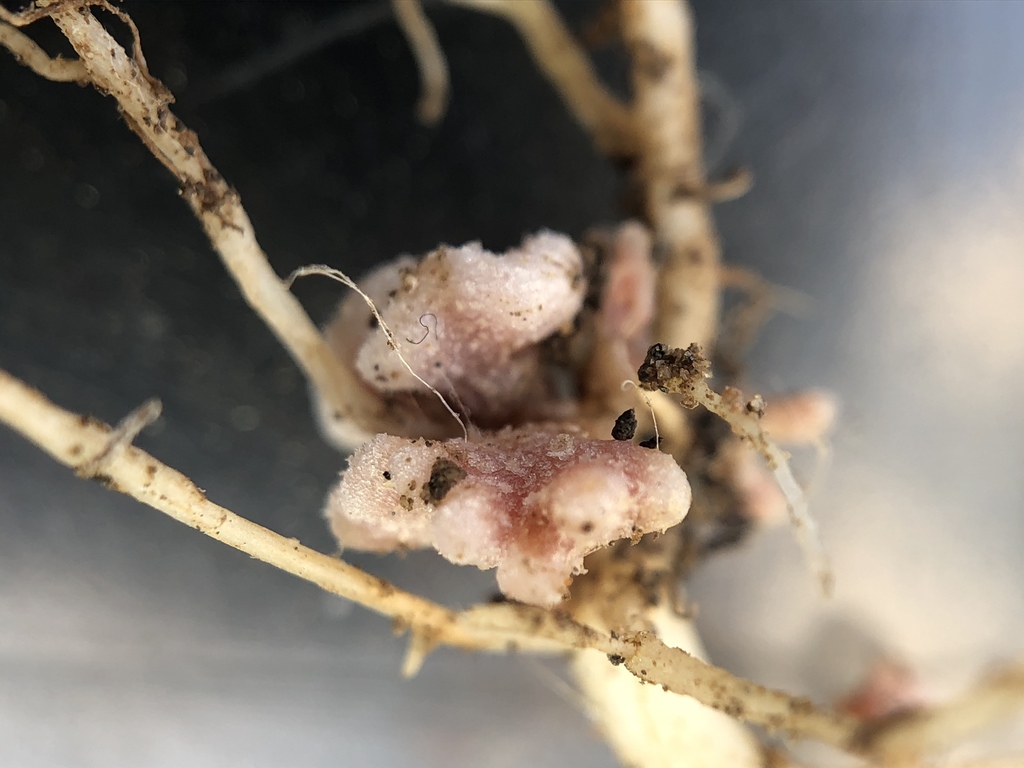
Several different groups of prokaryotes form mutualistic relationships with plant roots. Nitrogen is an essential nutrient for plants, yet it is difficult to obtain in many ecosystems. Though it is abundant in our atmosphere, this form a nitrogen (N2) is triple-bonded to itself, a bond which most organisms cannot break. However, certain bacteria have an enzyme called nitrogenase that can break the triple bond and convert nitrogen into usable forms for plants, such as ammonia (NH3). These bacteria can be found free-living in the environment or in mutualistic relationships with certain plants. A common relationship between plants and these nitrogen-fixing bacteria is the formation of root nodules–swellings in the plant roots that connect to the vascular tissue, allowing for the exchange of sugars and nutrients between the two different organisms.
Rhizobiales and Legumes
Plants in the bean family (Fabaceae) form mutualistic relationships in the form of root nodules with nitrogen-fixing bacteria in the order Rhizobiales.
.jpeg?revision=1&size=bestfit&width=622&height=468)
Frankia and Alder
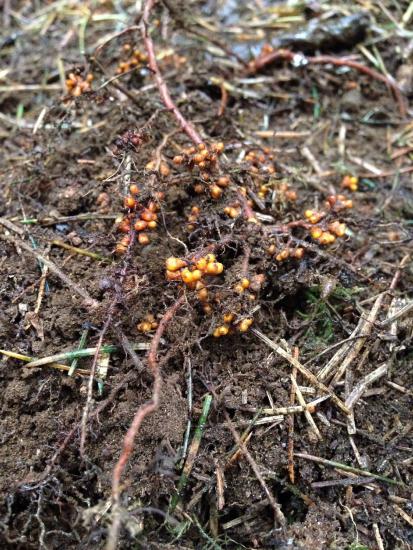
Frankia is a genus of bacteria that grows filamentously, called an actinomycete. Root nodules present on alder and few other groups of woody plants contain Frankia.
Summary
Some plants form a mutualistic relationship with bacteria for access to nitrogen. The bacteria infect the root hairs of the plant, forming a nodule. Within the nodule, the bacteria converts atmospheric nitrogen to a plant-available form. In return, the plant supplies the bacteria in the nodule with sugars.