


Learning Objectives
- Describe some of the important ecological roles performed by bacteria
- Explain a few ways bacteria interact with plants
- Differentiate between oxygenic and anoxygenic photosynthesis
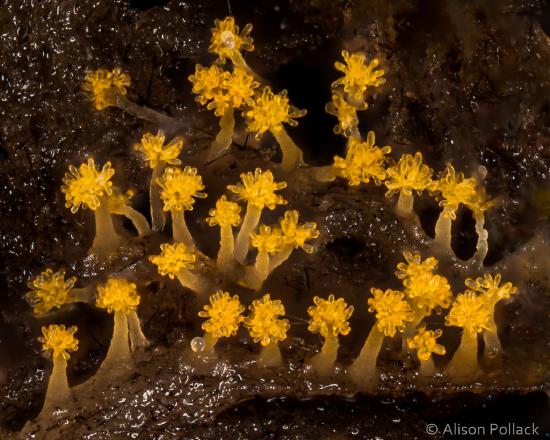
Bacteria are prokaryotes that, along with several other distinctions, have peptidoglycan in their cell wall. These unicellular organisms are incredibly diverse and involved in all ecological processes across every ecosystem. Though most are too small to see with the naked eye and thus easily overlooked, some bacteria, such as the myxobacteria (in the order Myxococcales), collaborate to produce multicellular structures (see Figure ). This section will address some select bacterial taxa relevant to botany.
Phototrophic Bacteria
The phototrophic bacteria are a large and diverse category of bacteria that do not represent a taxon but, rather, a group of bacteria that use sunlight as their primary source of energy. This group contains both Proteobacteria and nonproteobacteria. They use solar energy to synthesize ATP through photosynthesis. When they produce oxygen, they perform oxygenic photosynthesis. When they do not produce oxygen, they perform anoxygenic photosynthesis. With the exception of some cyanobacteria, the majority of phototrophic bacteria perform anoxygenic photosynthesis.
One large group of phototrophic bacteria includes the purple or green bacteria that perform photosynthesis with the help of bacteriochlorophylls, which are green, purple, or blue pigments similar to chlorophyll in plants. Some of these bacteria have a varying amount of red or orange pigments called carotenoids. Their color varies from orange to red to purple to green (Figure ), and they are able to absorb light of various wavelengths. Some green sulfur bacteria are able to photosynthesize at the bottom of the ocean using the light wavelengths emitted from geothermally heated rocks around hydrothermal vents!1 Traditionally, photosynthetic bacteria are classified into sulfur and nonsulfur bacteria; they are further differentiated by color (e.g. purple sulfur bacteria).
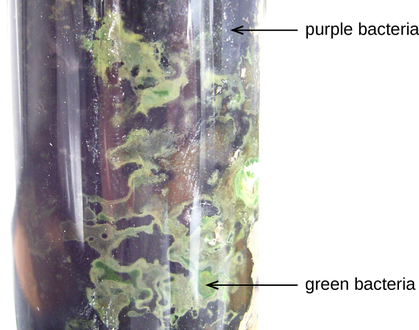
The sulfur bacteria perform anoxygenic photosynthesis, using sulfites as electron donors and releasing free elemental sulfur. Nonsulfur bacteria use organic substrates, such as succinate and malate, as donors of electrons.
The purple sulfur bacteria oxidize hydrogen sulfide into elemental sulfur and sulfuric acid and get their purple color from the pigments bacteriochlorophylls and carotenoids. Bacteria of the genus Chromatium are purple sulfur Gammaproteobacteria. These microorganisms are strict anaerobes and live in water. They use carbon dioxide as their only source of carbon, but their survival and growth are possible only in the presence of sulfites, which they use as electron donors. Chromatium has been used as a model for studies of bacterial photosynthesis since the 1950s.
The green sulfur bacteria use sulfide for oxidation and produce large amounts of green bacteriochlorophyll. The genus Chlorobium is a green sulfur bacterium that is implicated in climate change because it produces methane, a greenhouse gas. These bacteria use at least four types of chlorophyll for photosynthesis. The most prevalent of these, bacteriochlorophyll, is stored in special vesicle-like organelles called chlorosomes.
Purple nonsulfur bacteria are similar to purple sulfur bacteria, except that they use hydrogen rather than hydrogen sulfide for oxidation. Among the purple nonsulfur bacteria is the genus Rhodospirillum. These microorganisms are facultative anaerobes, which are actually pink rather than purple, and can metabolize (“fix”) nitrogen. They may be valuable in the field of biotechnology because of their potential ability to produce biological plastic and hydrogen fuel.
The green nonsulfur bacteria are similar to green sulfur bacteria but they use substrates other than sulfides for oxidation. Chloroflexus is an example of a green nonsulfur bacterium. It often has an orange color when it grows in the dark, but it becomes green when it grows in sunlight. It stores bacteriochlorophyll in chlorosomes, similar to Chlorobium, and performs anoxygenic photosynthesis, using organic sulfites (low concentrations) or molecular hydrogen as electron donors, so it can survive in the dark if oxygen is available. Chloroflexus does not have flagella but can glide, like Cytophaga. It grows at a wide range of temperatures, from 35 °C to 70 °C, thus can be thermophilic.
Another large, diverse group of phototrophic bacteria compose the phylum Cyanobacteria; they get their blue-green color from the chlorophyll contained in their cells (Figure ). Species of this group perform oxygenic photosynthesis, producing megatons of gaseous oxygen. Scientists hypothesize that cyanobacteria played a critical role in the change of our planet’s anoxic atmosphere 1–2 billion years ago to the oxygen-rich environment we have today. This group is discussed further in 3.1.3.1.
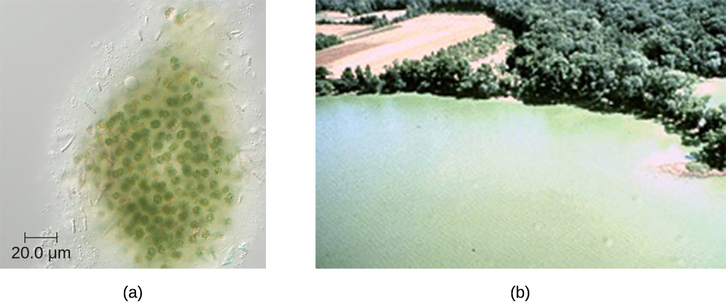
Table summarizes the characteristics of some important groups of phototrophic bacteria.
| Phylum | Class | Example Genus or Species | Common Name | Oxygenic or Anoxygenic | Sulfur Deposition |
|---|---|---|---|---|---|
| Cyanobacteria | Cyanophyceae | Microcystisaeruginosa | Blue-green bacteria | Oxygenic | None |
| Chlorobi | Chlorobia | Chlorobium | Green sulfur bacteria | Anoxygenic | Outside the cell |
| Chloroflexi (Division) | Chloroflexi | Chloroflexus | Green nonsulfur bacteria | Anoxygenic | None |
| Proteobacteria | Alphaproteobacteria | Rhodospirillum | Purple nonsulfur bacteria | Anoxygenic | None |
| Betaproteobacteria | Rhodocyclus | Purple nonsulfur bacteria | Anoxygenic | None | |
| Gammaproteobacteria | Chromatium | Purple sulfur bacteria | Anoxygenic | Inside the cell |
Bacteria and Plants
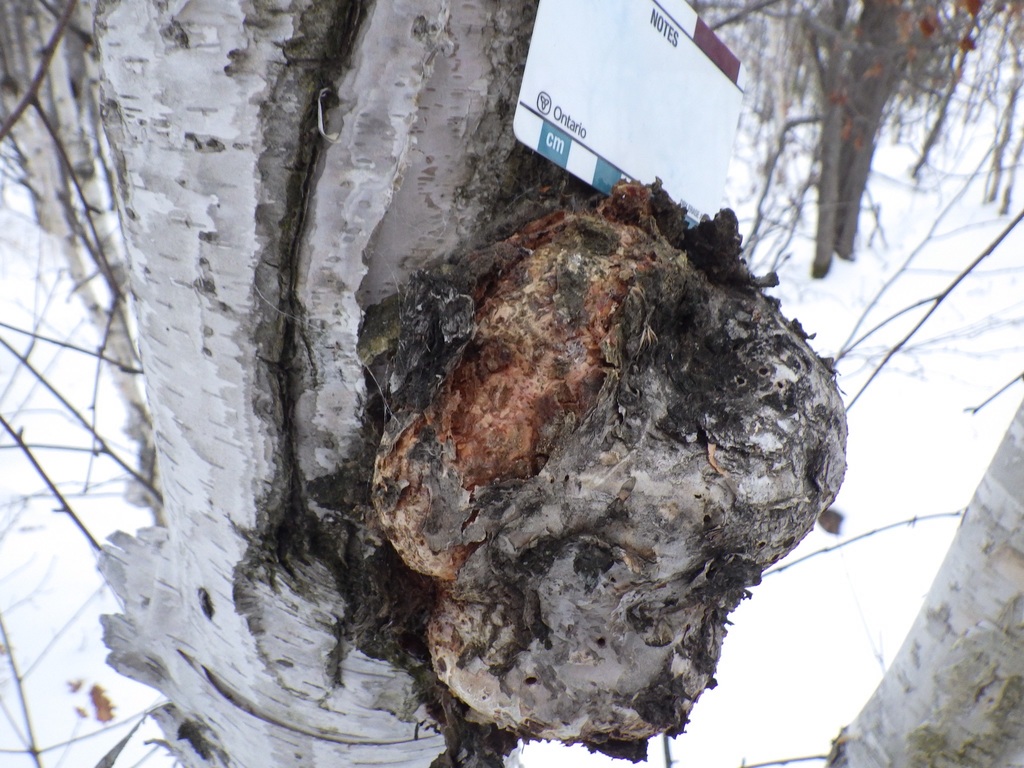
Some important plant diseases are caused by pathogenic bacteria. For example, members of the genus Agrobacterium infect a variety of plants. Much like viruses, these bacteria insert part of their own genome into their host, causing the infected plant to produce a large gall (Figure ). This genus is particularly famous for its use in the genetic engineering of plants. Scientists can insert a gene into the Agrobacterium genome, which will then be inserted into the plant after infection. Other pathogenic bacteria can cause rot, blight, and even death of some host species. Species like Pseudomonas syringae and Erwinia herbicola are capable of inducing the formation of ice (ice nucleation), injuring plant tissues.
In addition to diseases, many bacteria live within plant tissues, either freely or within endophytic fungi that live between the plant cells. These endophytic and/or endohyphal bacteria may play important roles in plant physiology, defense, and other aspects of plant biology by the production of a wide array of chemical compounds. Some bacteria are capable of nitrogen-fixation, converting atmospheric nitrogen into plant available forms. Plants in the bean family and alders have a mutualistic relationship with nitrogen-fixing bacteria and form structures called root nodules (see 3.1.3.2).
- Topic hierarchy
- 2.2.1.3.1: Cyanobacteria Cyanobacteria are a group of bacteria that perform oxygenic photosynthesis. The ancestors of modern cyanobacteria were responsible for the initial input of large amounts of oxygen into Earth’s atmosphere. Evidence of these early cyanobacteria can be found in fossilized structures called stromatolites, which are still formed in some regions of the world. Cyanobacteria can be found free-living or as mutualists within the tissues of other organisms.
- 2.2.1.3.2: Root Nodules Some plants form a mutualistic relationship with bacteria for access to nitrogen. The bacteria infect the root hairs of the plant, forming a nodule. Within the nodule, the bacteria converts atmosperic nitrogen to a plant-available form. In return, the plant supplies the bacteria in the nodule with sugars.
Summary
- Phototrophic bacteria are not a taxon but, rather, a group categorized by their ability to use the energy of sunlight. They include Proteobacteria and nonproteobacteria, as well as sulfur and nonsulfur bacteria colored purple or green.
- Sulfur bacteria perform anoxygenic photosynthesis, using sulfur compounds as donors of electrons, whereas nonsulfur bacteria use organic compounds (succinate, malate) as donors of electrons.
- Some phototrophic bacteria are able to fix nitrogen, providing the usable forms of nitrogen to other organisms.
- Cyanobacteria are oxygen-producing bacteria thought to have played a critical role in the forming of the earth’s atmosphere.
- Plants have complex symbiotic relationships with bacteria, including parasites, commensalists, and mutualists.
RELATED POSTS
View all

