Learning Objective
- Describe the difference between intraspecific and interspecific interactions in reference to competition
Biotic Interactions
Biotic interactions refer to the relationships among organisms. They can be intraspecific (between members of the same species) or interspecific (between members of different species). When at least one of the interacting organisms is harmed, the relationship is called an antagonism. Trophic interactions, in which one species consumes another, are antagonisms. Competition, commensalism, and mutualism are some examples of biotic interaction we find in communities.
Competition
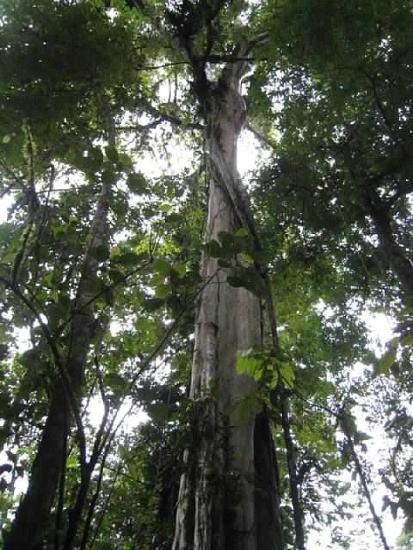
Competition occurs when organisms use the the same resources and one or both organisms is harmed. Plants often compete with one another for light (Figure ). In the tropical rainforests, where water is not a limiting factor, and much of the carbon is aboveground, plants compete with one another intensely. Often times, this is an example of interspecific competition as various species of plants, with different adaptations, compete to get sunlight. However, many plants of the same species are competing for that limited space and sunlight as well. Thus, we also see intraspecific competition.