

Production of ATP
May 17, 2024 | by Bloom Code Studio

ATP is an energy-rich compound primarily synthesized during cellular respiration in aerobic and anaerobic cells. Oxidation of glucose, lipids (fats), and amino acids produce the ATP molecules inside cells. The energy released during the oxidation of these nutrients is trapped in the form of the high-energy phosphodiester bond in the ATP molecule.
Glucose and ATP
Carbohydrate is the primary source of energy. Carbohydrates consumed in different forms (starch, sucrose, dextrose, lactose, fructose, etc.) are mostly broken down to monosaccharide form ‘glucose.’ Glucose is then subjected to metabolic reactions, glycolysis, Krebs cycle, and oxidative phosphorylation and is oxidized to release energy. This released energy is trapped and stored in the form of ATP.
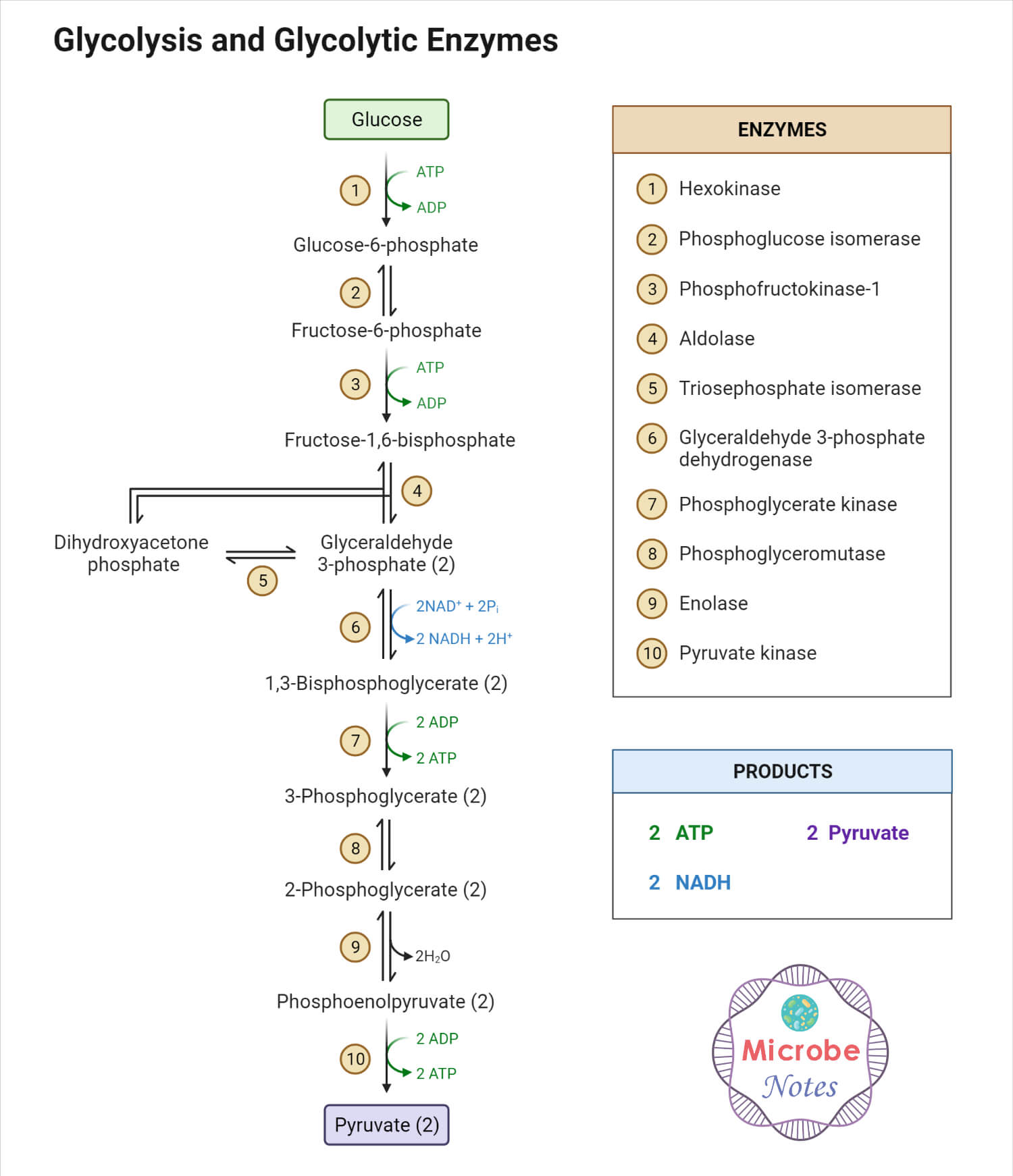
Similarly, proteins and lipids metabolism also produce simple end products like acetyl CoA, succinyl CoA, keto-acids, ammonia, etc., which are then subjected to the Krebs cycle and oxidative phosphorylation to yield ATP molecules.
RELATED POSTS
View all


Functions of ATP
May 17, 2024 | by Bloom Code Studio
4. Fermentation
May 17, 2024 | by Bloom Code Studio
ATP Synthesis Mechanisms
May 17, 2024 | by Bloom Code Studio