

What are Primary Consumers?
May 13, 2024 | by Bloom Code Studio

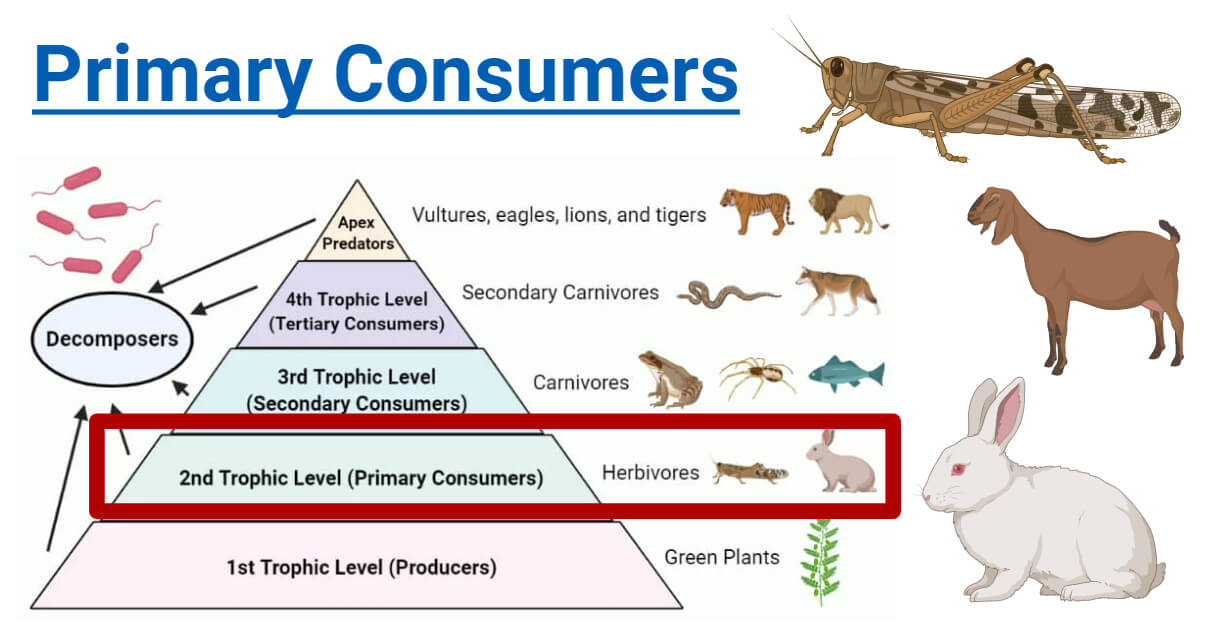
Primary consumers, also known as herbivores (or omnivores), are organisms that occupy the second trophic level within a food chain.
- Their primary source of energy comes from consuming producers, which are autotrophic organisms like plants or algae.
- The primary consumer plays an important role in the ecosystem by facilitating the flow of energy through the food chain. Its main job is to consume plants, converting the energy stored in them into a form that can be used by other consumers in the ecosystem.
- Primary consumers are vital in the trophic structure as they directly consume autotrophs. By feeding on producers, primary consumers transfer this energy to higher trophic levels.
- Primary consumers derive their energy directly from plants or algae. Unlike producers that generate energy through photosynthesis, primary consumers cannot make their own food so they obtain energy by consuming these autotrophs.
- Primary consumers act as an intermediary, making the energy stored in plants accessible to other organisms.
RELATED POSTS
View all


Primary Consumers in Trophic Levels
May 13, 2024 | by Bloom Code Studio
Examples of Primary Consumers
May 13, 2024 | by Bloom Code Studio
Role of primary consumers in the ecosystem
May 13, 2024 | by Bloom Code Studio