

Structure of Parenchyma Cell
May 13, 2024 | by Bloom Code Studio

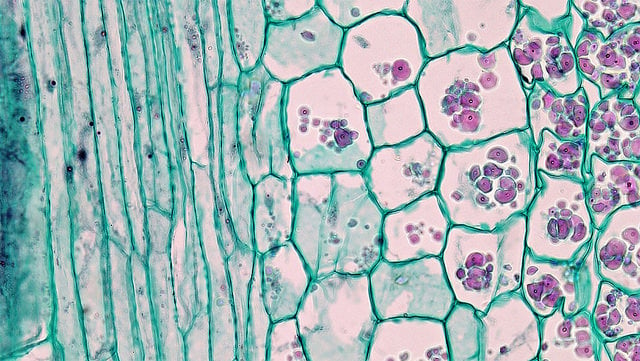
- The shape of each parenchyma cell is different such as polyhedral, stellate, elongate, lobed, circular, and isodiametric, based on the exact location and their function.
- These cells consist of thin cell walls which are composed of cellulose, hemicellulose, and calcium pectate. They are closely packed, and the intracellular space of parenchyma is small.
- This ground cell consists of prominent protoplast and nuclei.
- Parenchyma contains a central vacuole; because of this reason, its size is larger. Water and ions are stored by vacuoles.
- These cells have multiple small vacuoles, which are fused and form a large central vacuole in mature parenchyma.
- In general, parenchyma cells contain chloroplast (which perform photosynthesis), ribosome, endoplasmic reticulum, Golgi body, and plasmodesmata. These cells help in performing the secretory function.
- Plasmodesmata act as a linkage between the cells of the parenchyma tissue.
- Parenchyma may have a thick cell wall in some plants. For example endosperm of date palm, the sugar becomes the nutrients for germinating embryos, sugar is present in these thick walls.
RELATED POSTS
View all


What are Parenchyma Cells?
May 13, 2024 | by Bloom Code Studio
Functions of Parenchyma Cell
May 13, 2024 | by Bloom Code Studio
Parenchyma Cell- Definition, Structure, Types, Functions
May 13, 2024 | by Bloom Code Studio