

Natural Carbon Fixation
May 13, 2024 | by Bloom Code Studio

Natural carbon fixation processes play a fundamental role in maintaining a balanced carbon environment on Earth.
Photosynthesis in Plants and Algae
The process is central to carbon fixation on land and in aquatic environments.
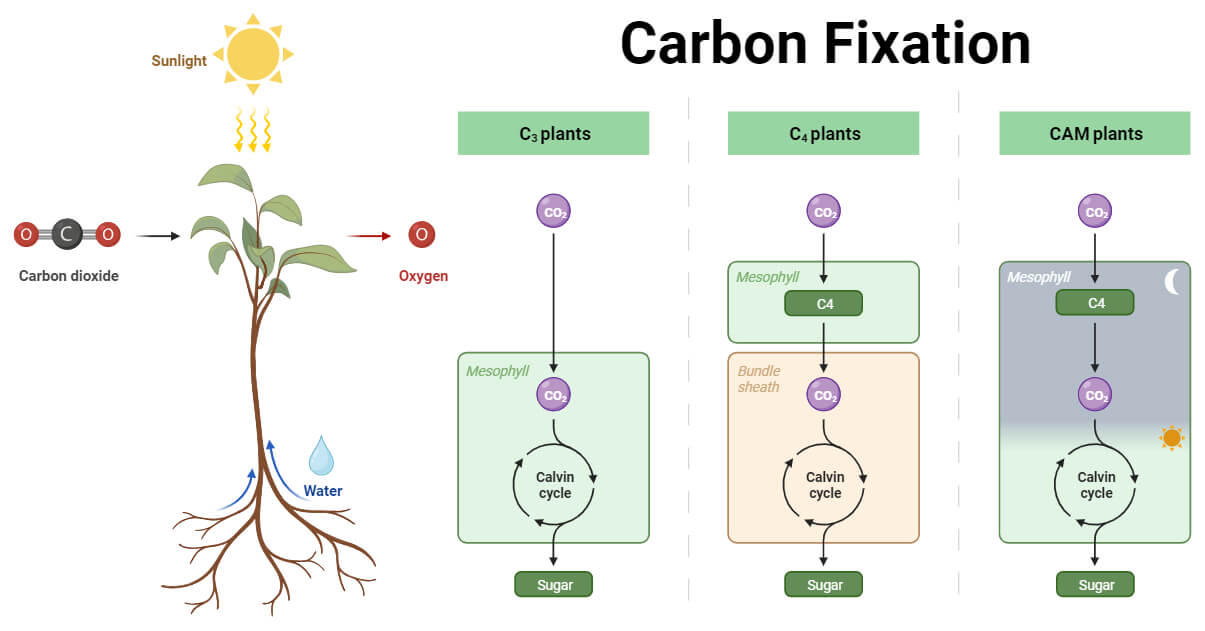
Plants and algae use chlorophyll to capture atmospheric carbon dioxide (CO2) during daylight hours. CO2 is transformed into glucose (sugar) and oxygen (O2) through chemical reactions.
Chemolithotrophy in Certain Bacteria
Specific bacteria engage in chemolithotrophy in extreme environments like deep-sea hydrothermal vents or acidic hot springs. These bacteria use inorganic compounds, such as sulfur or iron, as energy sources to convert CO2 into organic molecules.
This process contributes to carbon fixation in ecosystems where traditional photosynthesis is not feasible.
The Role of Oceans and Marine Organisms
Oceans serve as crucial natural carbon sinks in the global carbon cycle. Microscopic marine plants called phytoplankton perform photosynthesis similar to land-based plants. They capture carbon dioxide from seawater and convert it into organic matter.
Zooplankton and other marine organisms feed on phytoplankton and transfer fixed carbon through the marine food web.
RELATED POSTS
View all


Carbon Fixation in Aquatic Environments
May 13, 2024 | by Bloom Code Studio
Carbon Fixation: Processes, Pathways, and Implications
May 13, 2024 | by Bloom Code Studio
The Role of Photosynthesis in Carbon Fixation
May 13, 2024 | by Bloom Code Studio