

Mechanisms of osmosis (How does osmosis work?)
May 13, 2024 | by Bloom Code Studio

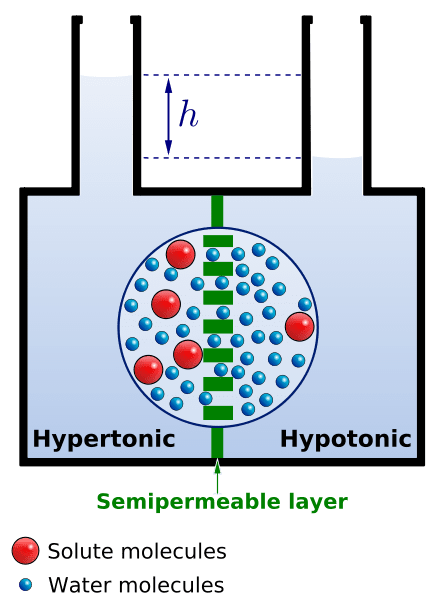
- In order to describe the process and mechanism of osmosis, we take two solutions separated by a semi-permeable membrane.
- One of the solutions is pure water while the other one is a solution of some solute and water.
- According to the definition of osmosis, in such a case, pure water moves across the membrane towards the solute solution.
- Several descriptions have been made to understand the driving force of osmosis. One such theorem explains that the movement of water across the membrane results due to the concentration gradient of water in the two solutions.
- This theorem, however, doesn’t explain the process of reverse osmosis, which occurs against the concentration gradient with the movement of solvent towards the solution of lower concentration.
- Another theorem put forth by several other scientists is the fact that the solute molecules in the solution attract the solvent molecules across the membrane. This theorem too doesn’t hold true as the size of the solute molecules does not influence the movement of a solvent across the membrane.
- Therefore, the process of osmosis has been explained with the concept of chemical potential.
- The chemical potential of pure water in one solution differs from the chemical potential of water in the solution with solute molecules.
- The interaction between the solute and water molecules reduces the pressure exerted by the water molecules in the solute solution. As a result, the water molecules in the pure water exert more pressure towards the solution with lower solvent concentration.
- This pressure results in the forcing of water across the membrane. This process continues until the pressure on both sides becomes equal leading to equilibrium.
RELATED POSTS
View all


Osmotic Pressure
May 13, 2024 | by Bloom Code Studio
Factors affecting osmosis
May 13, 2024 | by Bloom Code Studio
Osmosis: Definition, Types, Examples (Osmosis vs Diffusion)
May 13, 2024 | by Bloom Code Studio