

Ecological Niche- Definition, Components, Types, Examples
May 13, 2024 | by Bloom Code Studio

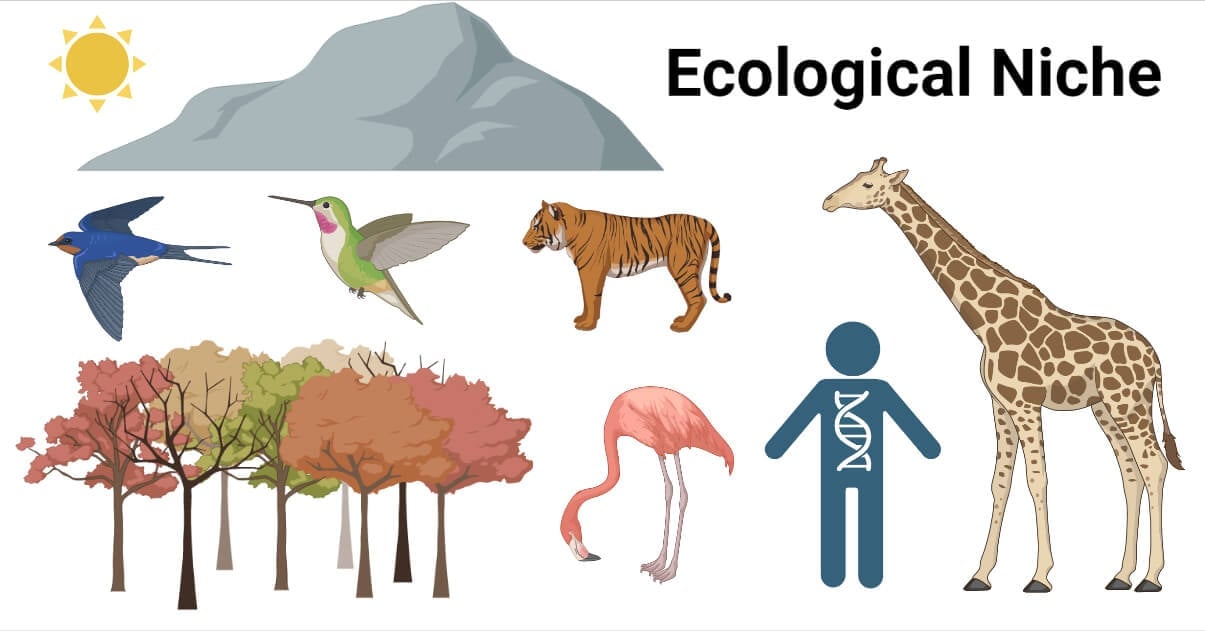
The ecological niche is the interaction between a species and all the biotic and abiotic elements that impact ecology.
The circumstances produced by biotic and abiotic elements of an ecosystem have consequences on how successfully the species can reproduce and obtain essential resources, such as food, water, and shelter, to survive and endure. Predators and food availability are biotic elements that affect a species’ niche. Likewise, temperature, topography, soil nutrients, and other non-living variables are abiotic factors that alter ecological niches. Because each species’ niche is distinct, no two species have precisely the same niche. The niche is a key factor in the preservation of species.
The term “niche” was first introduced by American ecologist Joseph Grinnell in 1917, and he viewed it as largely equal to a species’ habitat. His concept stressed environmental conditions that governed where a species might thrive instead of interaction between species. Since it was first coined, the concept of niche has evolved. Charles Sutherland Elton, an English ecologist, stated that a species’ place in a trophic web was similar to its niche in 1927. According to his definition, a species’ interactions with other species – specifically, its interaction with food and predators – determine its niche. The multidimensional space of resources that a species can access and employ was first described by an English ecologist, George Evelyn Hutchinson, in1958, nearly 40 years later, under the term “niche”. He combined these two definitions into one that was more comprehensive. His theory considers every biotic and abiotic component that can be quantified as influencing a species.
RELATED POSTS
View all


Importance of Ecological Niche
May 13, 2024 | by Bloom Code Studio
Components of Ecological Niche
May 13, 2024 | by Bloom Code Studio
Ecological Niche Examples
May 13, 2024 | by Bloom Code Studio