

Brassicaceae Family Floral Characters
May 13, 2024 | by Bloom Code Studio

- Inflorescence: Racemose type
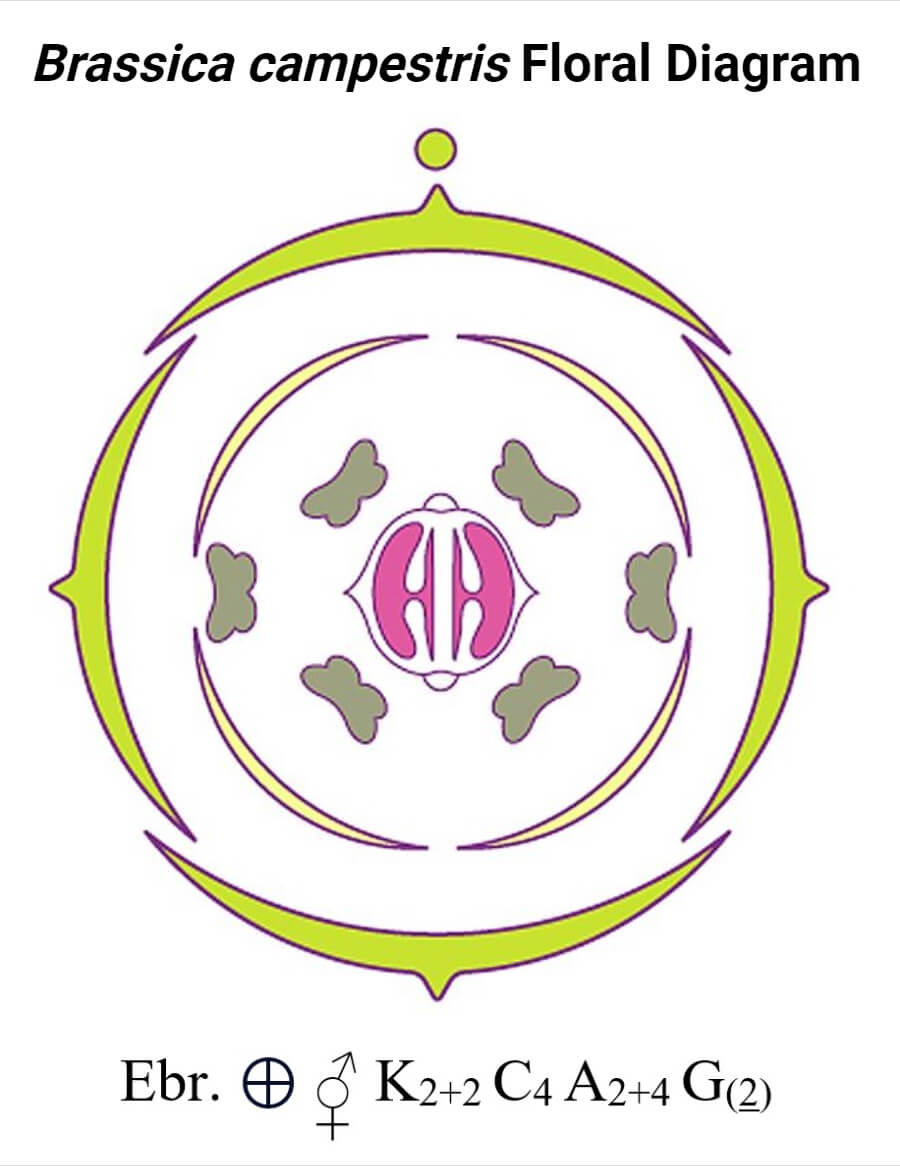
- Flower: Ebracteate, pedicellate, bisexual, complete, actinomorphic, rarely zygomorphic, tetramerous or bimerous, hypogynous, cyclic
- Calyx: 4 sepals, polysepalous, arranged in two whorls of two each, imbricate aestivation. Sepals may be caduceus, green or petalloid, inferior
- Corolla: 4 petals, polypetalous, cruciform
- Androecium: 6 stamens, polyandrous, stamens tetradynamous, arranged in two whorls, outer two stamen short while inner four stamen long, stamens having slender filaments that support the anthers at the top, the anther contain the pollen sacs where the pollen grains are produced
- Gynoecium: bicarpellary (two carpels), syncarpous, ovary superior, style short, stigma capitate, simple or bilobed, tricapellary i.e. three carpels (Lipidium), tetracarpellary i.e. four carpels (Tetrapoma)
- Fruits: Siliqua (elongated, narrow fruits with a long and slender shape) or silicula (elongated, narrow fruits with a short and broader shape)
- Pollination: cross-pollination, entomophilous, sometime self-pollination (arrangement of stamens and pistils within a flower promotes self-pollination).
- Seed: small, round to oval or elongated, non-endospermic with large curved embryo, cotyledons are oily
Brassicaceae Family Floral Formula

Brassicaceae Family Floral Diagram
RELATED POSTS
View all


Brassicaceae Family Distribution
May 13, 2024 | by Bloom Code Studio
Economic Importance of Brassicaceae Family
May 13, 2024 | by Bloom Code Studio
Brassicaceae Family Identification Characteristics
May 13, 2024 | by Bloom Code Studio