

Analogous Structures: Definition, 4 Examples, Significances
May 13, 2024 | by Bloom Code Studio

Evolution is the driving process of nature through which new species arise from their ancestral forms. The concept of evolution is essential for understanding how life on Earth has developed over time. One of the important concepts in evolution is convergent evolution, which helps us understand how different species can independently develop similar traits in response to similar environmental conditions. Convergent evolution leads to the formation of analogous structures.
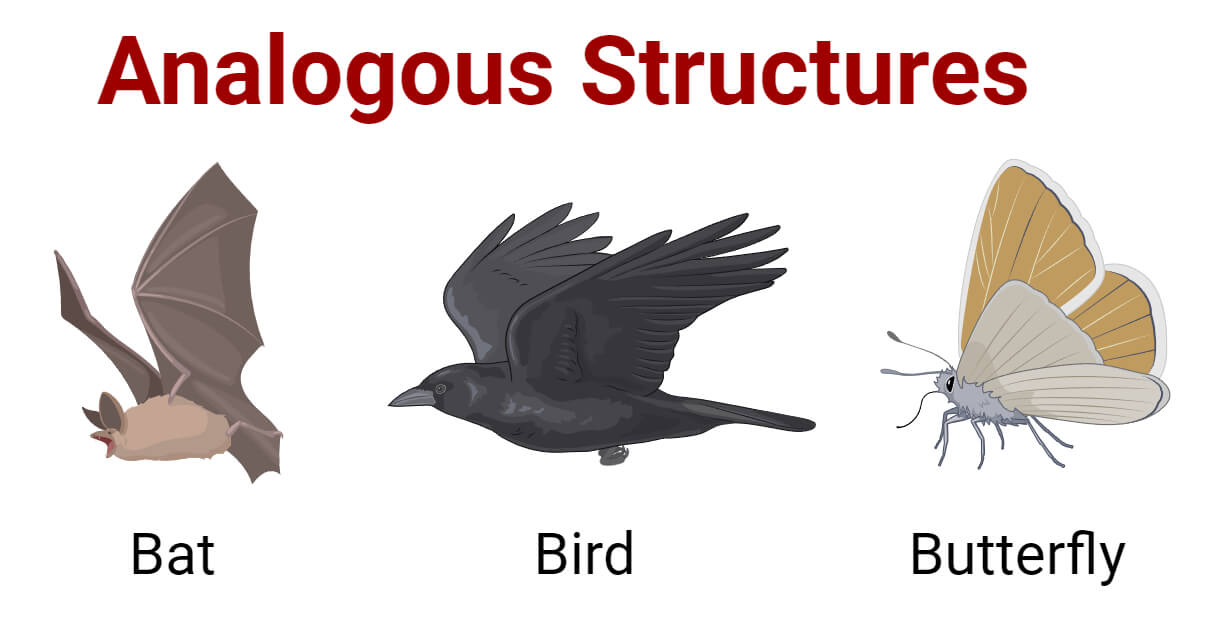
Throughout the evolutionary history of life on Earth, there are circumstances where organisms within the same or similar environments descend from different evolutionary origins, yet exhibit functionally similar traits called analogous structures. They develop similar traits in response to the shared ecological environment. These structures serve similar functions, even though they originated independently in different lineages.
Analogous structures support the idea that species can adapt to their surroundings over time, resulting in a diverse array of life. Analogous structures demonstrate that different species can, through entirely separate evolutionary pathways, arrive at similar solutions to the challenges presented by their environments.
RELATED POSTS
View all


What is Convergent Evolution?
May 13, 2024 | by Bloom Code Studio
Examples of analogous structures
May 13, 2024 | by Bloom Code Studio
Comparison between analogous and homologous structures
May 13, 2024 | by Bloom Code Studio