By the end of this section you will be able to:
- Define the term horticulture.
- Describe disciplines related to horticulture.
- Describe some of the specialties in the field of horticulture.
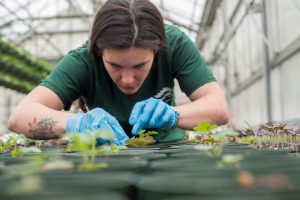
Horticulture and related disciplines
Horticulture
Horticulture
is the art and
science
of the development, sustainable production, marketing, and use of high-value, intensively cultivated food and ornamental plants. The word is derived from the Latin words hortus (garden plant) and cultura (tilling the soil).
Horticulture
includes ornamental and food plants that are grown with intensive and individualized care, and often in a small space rather than in an expansive field.
| Horticultural plants overview | |
| Ornamental plants | Food plants |
| Flowers, ornamental shrubs, ornamental trees, turfgrass, native grasses, and forbs are all horticultural plants. | The plants producing the vegetables and fruits we eat are all horticultural plants. |
| They all have a fairly high value per acre. | They have a high value per acre and, like the ornamental plants, require intensive management. |
Agronomy
Agronomy
is another term commonly used in reference to food production, and refers to the management of plants grown over large areas with less intensive management than that normally provided to garden plants. Its etymology is from the Greek agros (= field) and nomos (~management).
Agronomy
fields are larger than gardens, so the plants grown in these fields are less intensively and individually managed than those in most gardens. It is estimated that a single
agronomy
farm produces food for over 150 people.
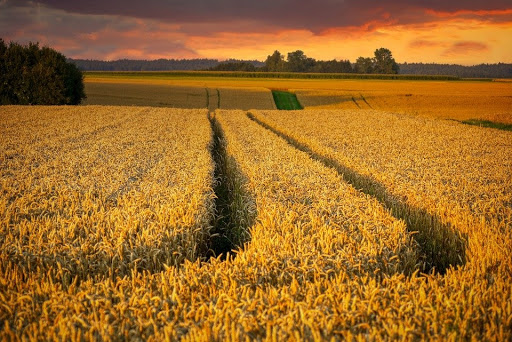
Extensive agronomic crop production requires fewer person-hours of management per acre than intensive horticultural production, which requires more person-hours of management. In contrast,
agronomy
refers to management of field crops such as cereals (e.g. corn, wheat, rice, barley) and legumes (e.g. soybeans, common beans, peanuts, alfalfa) and a few other high-acreage crops, like cotton. These are typically plants that have a low dollar value per acre, and in many cases the crops are used for animal feed rather than for direct human consumption. These are grown over extensive areas with less intensive management, or at least with fewer people per acre involved in managing the crop than would be typical of horticultural crops.
Forestry
Forestry
is the
science
or practice of propagating, planting, managing, and caring for forests, and of harvesting products from them.
Forestry
, which focuses on trees for building materials, pulp, and paper, is a third type of plant-production system, considered separately from
horticulture
and
agronomy
, and is not covered in this course.
Agriculture
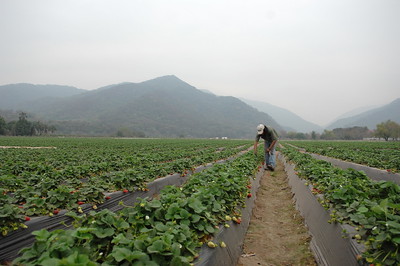
Agriculture
is the
science
or practice of farming, including cultivating soil for growing crops and rearing animals to provide food, fiber, and other products. The term is derived from the Latin ager (field) and cultura (tilling the soil). While the Latin
root
means “field” and implies a larger land area than “garden,” “
agriculture
” typically encompasses both
horticulture
and
agronomy
. For instance, the University of Minnesota College of Food, Agricultural and Natural Resource Sciences (UMN CFANS) includes both the Department of Horticultural
Science
and the Department of
Agronomy
and Plant Genetics. There is, however, no hard, distinct line separating
horticulture
and
agriculture
. While
horticulture
deals with plants you might find in a garden, it’s common to find those same plants (like vegetables and fruits) grown in large fields and harvested in volumes sufficient to supply grocery stores. Other ornamental garden plants, such as annual and
perennial
flowers, ornamental shrubs, and trees, are planted in extensive, designed landscapes. Field corn used for animal feed is considered an agricultural crop, while sweet corn is considered a horticultural crop, yet they are the same species of plant.
Here is a summary of terms:
- Horticulture: Requires intensive management on fewer acres and higher human input per acre, and produces a higher value per acre. Includes ornamental plants and whole foods (like those found in the produce aisle).
- Agronomy: Requires extensive production on more acres with lower human input per acre, and produces a lower value per acre. Includes animal feed and processed food ingredients, (such as oil, protein, sugar, and starch).
- Agriculture encompasses both horticulture and agronomy.
Domesticated plants and wild plants
The plants grown in horticulture and agronom are usually domesticated rather than wild, meaning that humans have selected them, intentionally or unintentionally, for particular characteristics such as adaptation to cultivation in a garden, large showy flowers, or large, sweet fruits. You will learn about the
science
of plant improvement and domestication in the section on plant breeding.
Because garden plants are grown in modest-sized spaces, the gardener can provide intensive management such as a complex garden design, special care for the soil and plant health, and regular weed
control
In general, then, “
horticulture
” refers to domesticated ornamental and food plants that humans grow in modest-sized spaces where they provide intensive management.
Horticulture and plant propagation
Science of plants

Plant
science
explores how a plant is put together and how its parts work together during a plant’s life cycle — from
seed
to
seed
.
Throughout this course, you will study plant structure, growth, and reproduction, applying what you learn to plant propagation practices in the lab portion of this course.
Science in our lives
For many of you, this course might be the only
science
course you take. The course therefore goes beyond the subject of plants to help you to see the world as a scientist might see it.
Science
is a systematic enterprise that builds and organizes knowledge in the form of testable explanations based on observations and predictions.
You will learn how to propagate plants, and learn about plant structure and function. But perhaps more importantly, you will learn about
science
as a way of understanding and appreciating the world around you — in this case, the horticultural world around you.
RELATED POSTS
View all